
 https://geodesy.science/wp-content/uploads/ecs_AdobeStock_3647304651.jpeg
653
2208
admin
https://geodesy.science/wp-content/uploads/IAG-logo-web.png
admin2025-11-24 06:12:532025-11-24 07:27:33Open Call for Early Career Researchers – EPOS-GNSS TCS Participation in EPOS Days 2026
https://geodesy.science/wp-content/uploads/ecs_AdobeStock_3647304651.jpeg
653
2208
admin
https://geodesy.science/wp-content/uploads/IAG-logo-web.png
admin2025-11-24 06:12:532025-11-24 07:27:33Open Call for Early Career Researchers – EPOS-GNSS TCS Participation in EPOS Days 2026 https://geodesy.science/wp-content/uploads/eventNews1_AdobeStock_238163501.jpeg
1004
1504
admin
https://geodesy.science/wp-content/uploads/IAG-logo-web.png
admin2025-11-24 06:10:222025-11-24 07:20:12Canadian Geophysical Union 2026 Scientific Meeting – Call for Abstracts
https://geodesy.science/wp-content/uploads/eventNews1_AdobeStock_238163501.jpeg
1004
1504
admin
https://geodesy.science/wp-content/uploads/IAG-logo-web.png
admin2025-11-24 06:10:222025-11-24 07:20:12Canadian Geophysical Union 2026 Scientific Meeting – Call for Abstracts https://geodesy.science/wp-content/uploads/AdobeStock_254781413.jpeg
1120
1680
Martin Sehnal
https://geodesy.science/wp-content/uploads/IAG-logo-web.png
Martin Sehnal2025-11-20 11:02:342025-11-20 11:12:09New IAG Publications | Geodesist’s Handbook 2024 & IAG Travaux 2023–2025
https://geodesy.science/wp-content/uploads/AdobeStock_254781413.jpeg
1120
1680
Martin Sehnal
https://geodesy.science/wp-content/uploads/IAG-logo-web.png
Martin Sehnal2025-11-20 11:02:342025-11-20 11:12:09New IAG Publications | Geodesist’s Handbook 2024 & IAG Travaux 2023–2025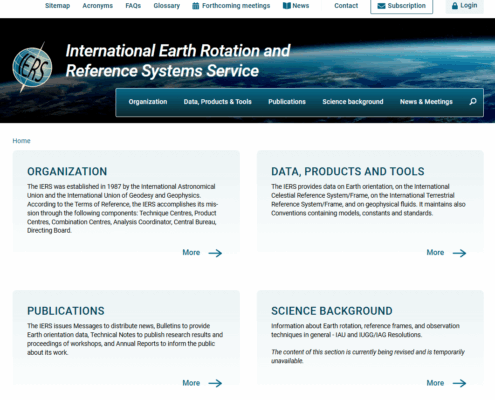 https://geodesy.science/wp-content/uploads/iers-website-relaunch-2025-1.png
884
1062
admin
https://geodesy.science/wp-content/uploads/IAG-logo-web.png
admin2025-11-18 14:58:102025-11-18 14:58:10IERS | Relaunch of the Website www.iers.org
https://geodesy.science/wp-content/uploads/iers-website-relaunch-2025-1.png
884
1062
admin
https://geodesy.science/wp-content/uploads/IAG-logo-web.png
admin2025-11-18 14:58:102025-11-18 14:58:10IERS | Relaunch of the Website www.iers.org https://geodesy.science/wp-content/uploads/EGU26_GGOS-Session-1.png
512
768
admin
https://geodesy.science/wp-content/uploads/IAG-logo-web.png
admin2025-11-07 11:28:272025-11-05 12:39:01Call for Abstracts – EGU26 Session G2.2 “New Technologies for GGOS”
https://geodesy.science/wp-content/uploads/EGU26_GGOS-Session-1.png
512
768
admin
https://geodesy.science/wp-content/uploads/IAG-logo-web.png
admin2025-11-07 11:28:272025-11-05 12:39:01Call for Abstracts – EGU26 Session G2.2 “New Technologies for GGOS”