GGOS Africa established as a GGOS Affiliate
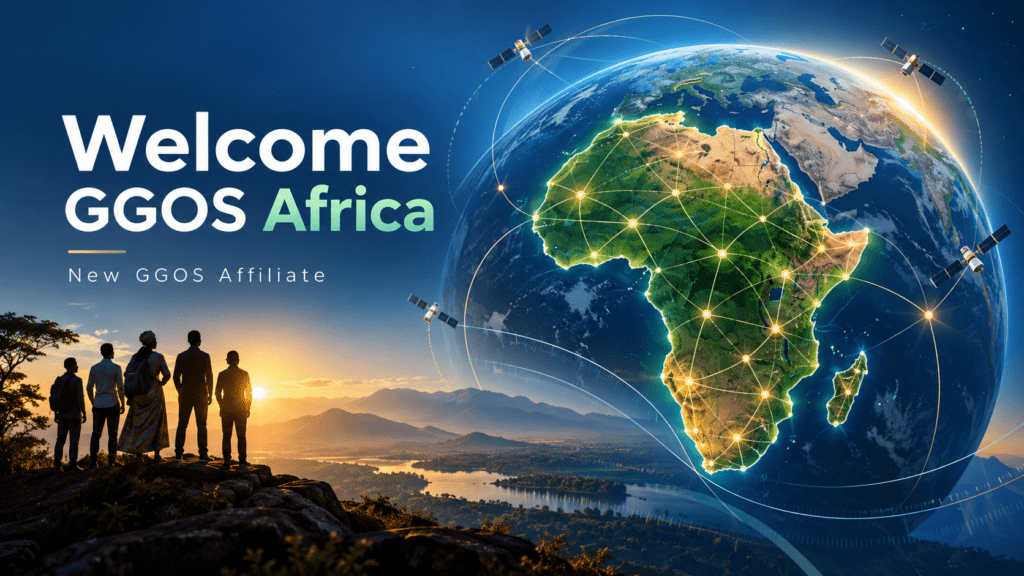
 The GGOS GGOS Governing Board has approved on 21 September 2026 the establishment of GGOS Africa as a new GGOS Affiliate. The decision gives African geodesy a formal coordinating platform within the Global Geodetic Observing System and marks an important step towards strengthening the continent’s contribution to the global geodetic infrastructure.
Africa remains one of the most sparsely covered regions in the global geodetic network. The distribution of fundamental stations, continuously operating reference stations, and analysis capacity across the continent is uneven, which affects the quality of global reference frames and African countries’ ability to use geodetic data for their own needs, from land administration and infrastructure to hazard monitoring and climate services.
GGOS Africa was established to coordinate geodetic activities across the continent, support infrastructure and human capacity development, and strengthen the participation of African institutions and researchers in GGOS, the IAG, and the wider international community. It works alongside existing African structures, in particular the UN-GGIM: Africa working group on the African Geodetic Reference Frame (AFREF) and provides a single point of engagement between the African geodetic community and GGOS. The Secretariat is hosted by South Africa’s Department of Science, Technology and Innovation.
Early progress has been supported by seed funding through the Africa-UK Physics Partnership with the University of Manchester, funded by UK Research and Innovation, under the project “Building the foundation for geodetic excellence in Africa”. This support enabled the continental surveys of geodetic infrastructure and human capacity, the development of the GGOS Africa framework and implementation plan, and the engagement across the continent that led to this affiliate application. The funding runs to 2027, and securing sustained support beyond that is a priority for the period ahead.
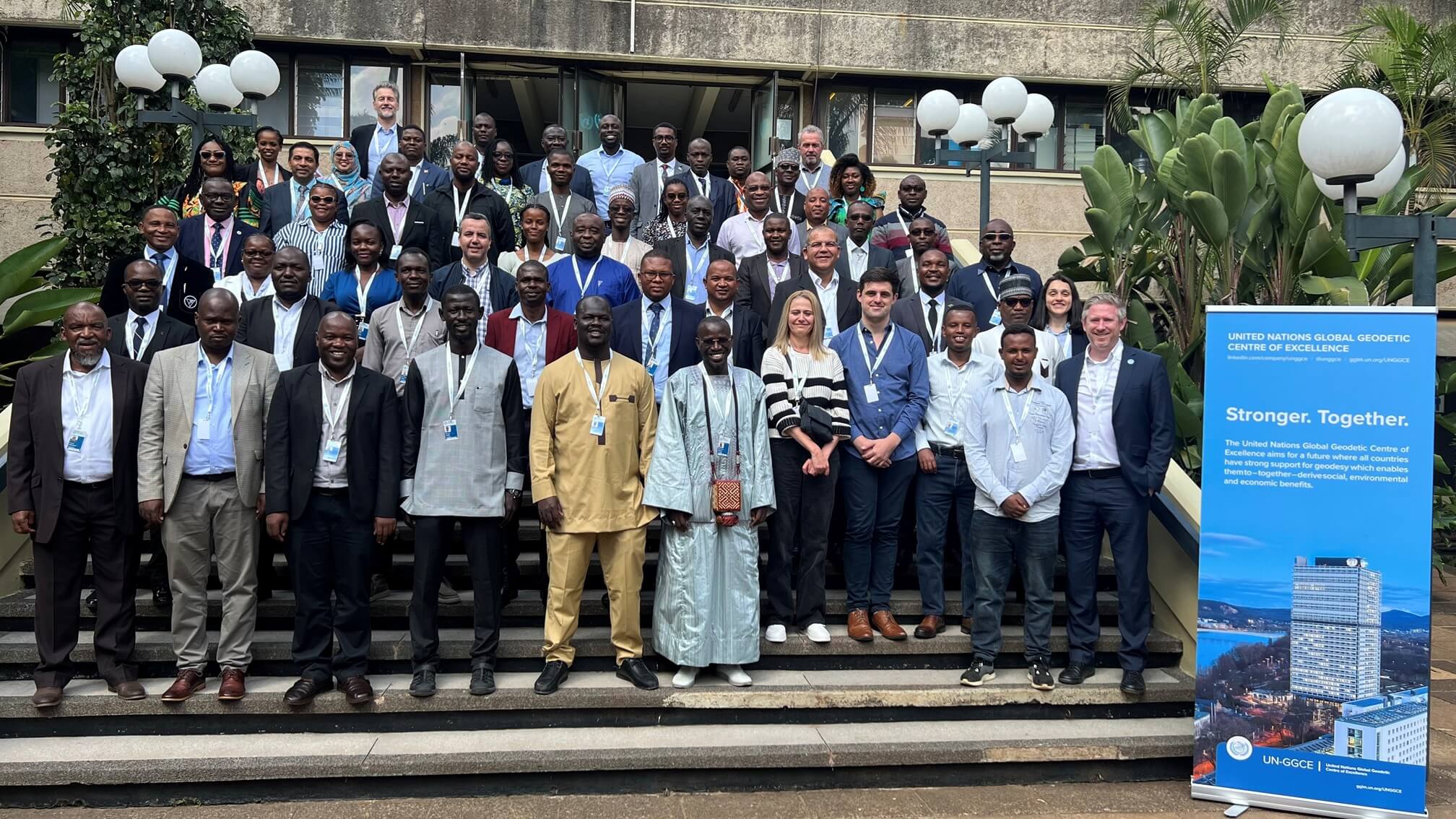
UN-GGCE Geodesy Capacity Development Workshop for Africa, 19 to 23 May 2025, Nairobi, Kenya. Credit: UN-GGCE Geodesy
The same support underpins the first GGOS Africa Workshop, which takes place in Nairobi, Kenya, from 5 to 7 October 2026 under the theme “Building the Foundation for Geodetic Excellence in Africa”. It returns to Nairobi, where the UN-GGCE Geodesy Capacity Development Workshop for Africa on Transitioning to a Modern Geospatial Reference System was held from 19 to 23 May 2025. That workshop brought the African geodetic community together and laid much of the groundwork for this initiative. The 2026 workshop marks the formal launch of GGOS Africa as an affiliate and sets its work programme. Over three days, it will present the first results of the GGOS Africa surveys of geodetic infrastructure and human capacity, review existing and planned infrastructure and the history of geodesy in Africa, hear country presentations and contributions from the geodesy, surveying, geodynamics, astronomy and space science domains, and consider education, regional centres and analysis centres. It closes with the adoption of resolutions setting out the way forward for implementation.
A key priority for the period ahead is strengthening geodesy across the continent through multi-domain collaboration and analysis capacity. Much can be gained by leveraging what has already been built through astronomy, space science and geophysics, and by bringing those communities together to make better use of shared infrastructure, data and training. Africa contributes observational data to the global services, but relatively little of the analysis is carried out on the continent. Developing African analysis centres, for AFREF and in time as contributors to the IAG services, is essential if the continent is to move from hosting infrastructure to shaping the products that come from it. This depends as much on training and computational infrastructure as on the stations themselves.
The establishment of GGOS Africa is the result of sustained work by colleagues across the continent, supported by our partners at the University of Manchester and the UN Global Geodetic Centre of Excellence, whose capacity development work in Africa helped bring the community together. Thanks are also due to the IAG and to GGOS, particularly the Governing Board, Science Panel and Coordinating Office, whose engagement during the review process strengthened the proposal considerably. The work now begins in earnest.
Author: Aletha de Witt (Director: Radio Astronomy Projects, South Africa)