
GGOS Days 2026
GGOS is the Global Geodetic Observing System of the International Association of Geodesy (IAG). Through GGOS, the IAG provides a common framework to encourage, coordinate and facilitate Earth-monitoring efforts based on geodesy. This framework aims to integrate observations collected by different national and international organisations and to raise awareness of geodesy and its products. GGOS relies on the existing geodetic observing infrastructure and the IAG organisational structure. The IAG Commissions, Inter-Commission Committees and Projects address key scientific issues to innovate methods and technologies in the various fields of geodesy, framing the science background for GGOS. The IAG Services facilitate the global coordination of activities to collect and analyse geodetic data and to provide geodetic reference frames and other products to geodesists, researchers of other Earth sciences, national administrations, and society in general. Additional operational elements dedicated solely to GGOS issues ensure the efficient organisation of GGOS activities and address challenges that cannot be solved by individual IAG components alone.
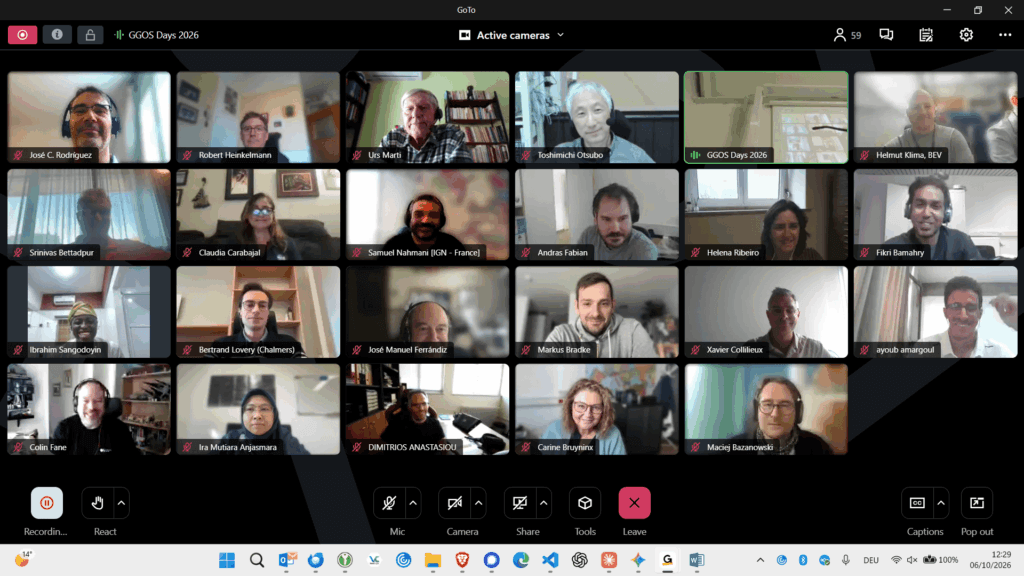
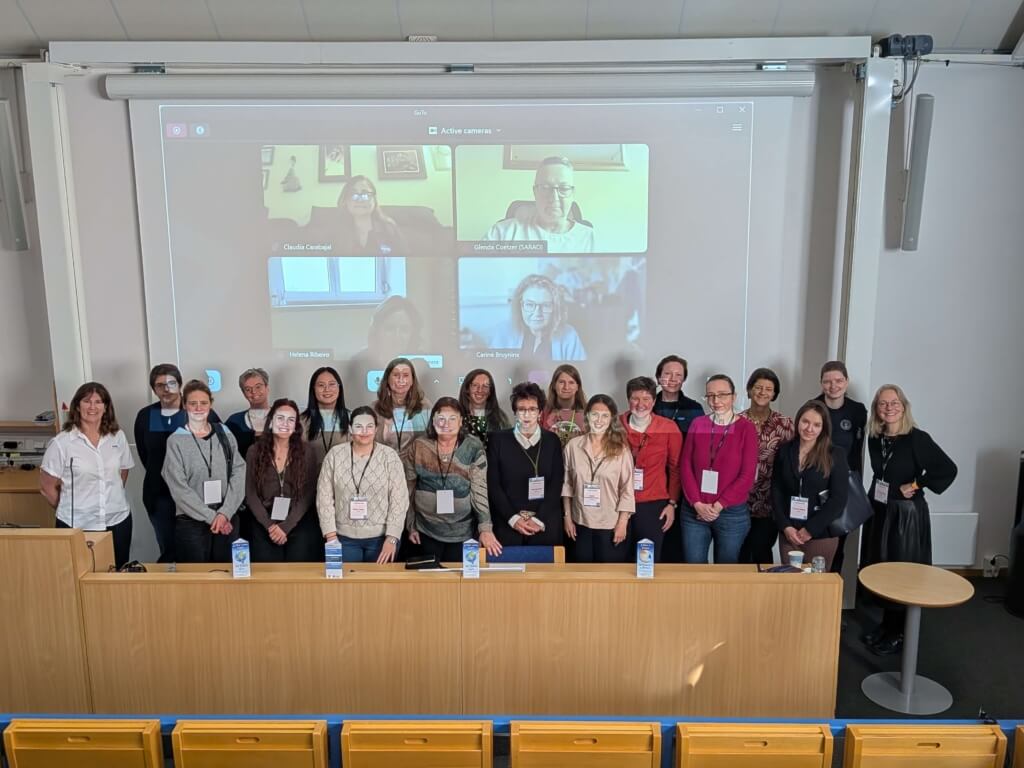
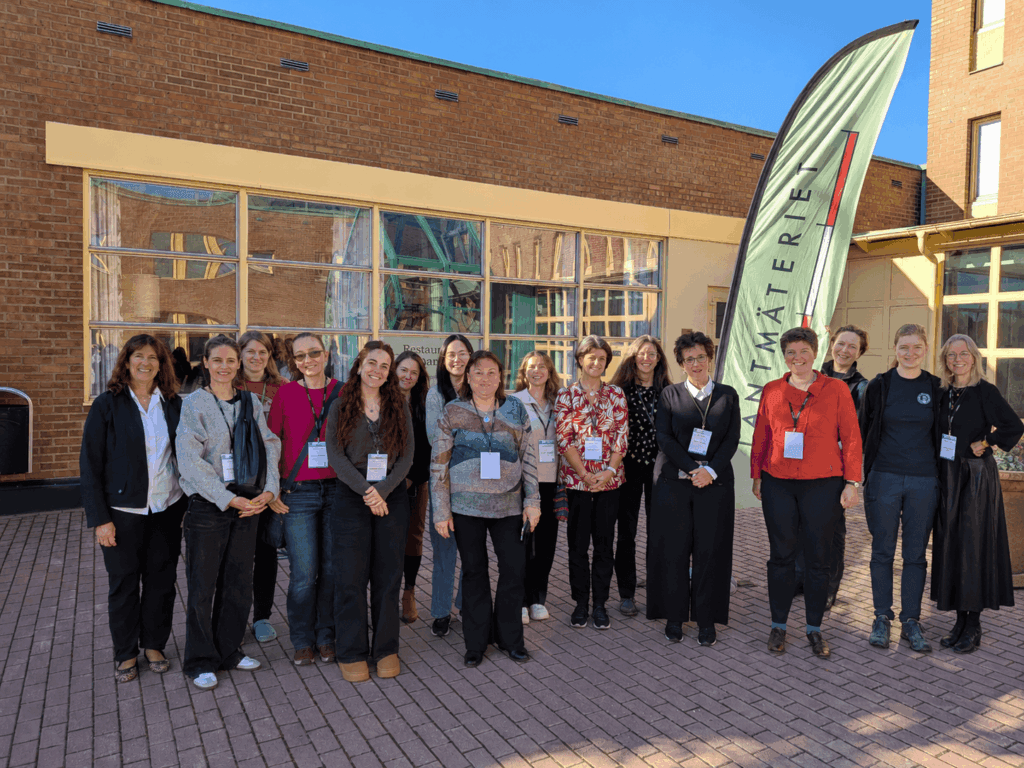
Each year, the GGOS Executive Committee organises the GGOS Days to update the IAG and GGOS communities on recent achievements and current challenges faced by the various colleagues involved in accomplishing the GGOS strategic goals. On this occasion, thanks to the kind invitation of Lantmäteriet, the Swedish Mapping, Cadastral and Land Registration Authority, the GGOS Days 2026 will be held as a hybrid meeting in Gävle, Sweden, from October 5 to 7, 2026.
In the week before the GGOS Days 2026, the TIGER Symposium of IAG Commission 3 (28 September to 1 October) and a GGOS Topical Meeting on Geohazards (2nd October) will also be held in Gävle. Participants of the GGOS Days 2026 are also welcome to attend the TIGER Symposium and the GGOS Topical Meeting on Geohazards.
Programme
Monday, October 5
08:30 - 09:15 | Registration
Please arrive in good time before the start of the GGOS Days to collect your badge.
09:15 - 10:15
Opening Session
chair: Laura Sánchez
- 09:15 – 09:30
Welcome, logistics, safety - 09:30 – 09:45
GGOS: the observing system of the International Association of Geodesy
Laura Sánchez (DGFI-TUM, Germany)
Onsite - 09:45 – 10:00
News from the International Association of Geodesy
Richard Gross (IAG, USA)
Onsite - 10:00 – 10:15
Strengthening the Chain: Securing the operational future of global geodesy
Allison Craddock (UN-GGCE, Germany)
Onsite
10:15 - 10:45 | Coffee Break
- Coffee break is provided at the venue
- Kindly sponsored by Lantmäteriet
10:45 - 12:30
Swedish Geodesy: Building Infrastructure at Home and Abroad
chair: Rebekka Steffen
- 10:45 – 11:00
Lantmäteriet and Geodetic infrastructure in Sweden – the new 10 yr strategy
Martin Lidberg (Lantmäteriet, Sweden)
Onsite - 11:00 – 11:15
Strengthening Geodetic Infrastructure in Africa: Swedish Experiences
Mikael Lilje (Lantmäteriet, Sweden)
Onsite - 11:15 – 11:30
EPOS-SE: The Swedish contribution to FAIR solid Earth sciences data in the European Plate Observing System (EPOS)
Henning Lorenz (Uppsala University, Sweden)
Onsite - 11:30 – 11:45
On the development of BSCD2000, the new common chart datum for the Baltic Sea
Jonas Ågren (Lantmäteriet, Sweden)
Onsite - 11:45 – 12:00
Running a geodetic fundamental station – status and plans for Onsala
Ruediger Haas (Chalmers, Sweden)
Onsite - 12:00 – 12:15
The Nordic Geodetic Commission (NKG) – a successful cooperation between the Nordic and Baltic countries
Martin Lidberg (Lantmäteriet, Sweden)
Onsite - 12:15 – 12:30
NKG working groups – organisation, projects and activities
Holger Steffen (Lantmäteriet, Sweden)
Onsite
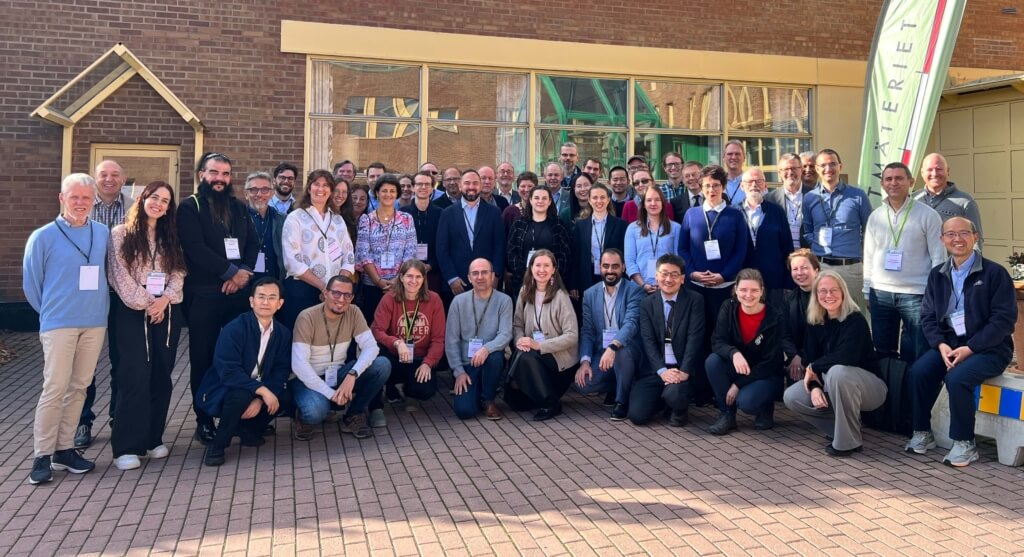
12:30 - 13:40 | Group Photo
- Group photo at the entrance of Lantmäteriet.
- Please head there promptly so we have enough time for lunch.
12:40 - 13:30 | Lunch Break
- Lunch is available at the Lantmäteriet restaurant in the same building.
- Tables are reserved for GGOS Days participants.
- A buffet is offered, with refills included, for SEK 135 per person (currently about €12),
- Everyone pays individually.
13:30 - 15:15
Standardisation, integration, and optimisation of geodetic products
chair: Detlef Angermann
- 13:30 – 13:45
GGOS Bureau of Products and Standards: Update
Detlef Angermann (DGFI-TUM, Germany)
Onsite - 13:45 – 14:00
Lunar reference systems
Agnès Fienga (Geoazur, Unice, France)
Online - 14:00 – 14:15
Towards an updated reference level ellipsoid
Urs Marti (swisstopo, Switzerland)
Online - 14:15 – 14:30
On the implementation status of ITGRF
Ezequiel Antokoletz (BKG, Germany)
Onsite - 14:30 – 14:45
Progress on the implementation of the Essential Geodetic Variables
Thomas Gruber (TUM, Germany)
Onsite - 14:45 – 15:00
Increased Automation in Geodetic Data Analysis
Benedikt Soja (ETH Zurich, Switzerland)
Onsite - 15:00 – 15:15
Summary, wrap up
Detlef Angermann (DGFI-TUM, Germany)
Onsite
15:15 - 15:45 | Coffee Break
- Coffee break is provided at the venue
- Kindly sponsored by Lantmäteriet
15:45 - 17:30
GGOS/IERS joint session: UAW2026 follow-up
chair: Laura Sánchez, Robert Heinkelmann
- 15:45 – 16:00
IERS Conventions updates
Sharyl Byram (USNO, USA)
Online - 16:00 – 16:15
Challenges in the new ITRF operational updates
Robert Heinkelmann (GFZ, Germany)
Online - 16:15 – 16:30
Challenges and opportunities in analysing Genesis data
Johannes Böhm (TU Wien, Austria)
Online - 16:30 – 16:45
Geophysical models and geodetic data analysis
Jeff Freymueller (Michigan State University, USA)
Onsite - 16:45 – 17:00
Correlations in atmospheric parameter estimation
Benedikt Soja (ETH Zurich, Switzerland)
Onsite - 17:00 – 17:15
Resilience of IAG Services
Richard Gross (IAG, USA)
Onsite - 17:15 – 17:30
Summary, wrap up
Laura Sánchez (DGFI-TUM, Germany)
Onsite
Please have a look at the UAW2026 Meeting Summary Document (PDF).
Evening | Dinner (self-paid)
19:00 – 22:00
- Self-paid dinner
- Restaurant: Högbo Qvarn (in the area of Höngbo Bruk)
- Address: Daniel Tilas väg 9, 811 92 Sandviken, Schweden
- A bus will be organized to bring all dinner participants to the restaurant and back
- All details will be provided to the dinner registrants by email and on-site on October 5
Tuesday, October 6
08:30 - 09:00
Focus Area Artificial Intelligence for Geodesy
Benedikt Soja
- 08:30 – 09:00
Updates from the Focus Area Artificial Intelligence for Geodesy
Benedikt Soja (ETH Zurich, Switzerland)
Onsite
09:00 - 10:15
Focus Area Geodetic Space Weather Research
chair: Michael Schmidt
- 09:00 – 09:15
Updates from the Focus Area Geodetic Space Weather Research
Michael Schmidt (DGFI-TUM, Germany)
Online - 09:15 – 09:30
Understanding Ionospheric and Plasmaspheric Processes
Fabricio dos Santos Prol (NLS, Finland)
Online - 09:30 – 09:45
Atmospheric Coupling Studies
Andres Calabia Aibar (Universidad de Alcalá, Spain)
Online - 09:45 – 10:00
Thermosphere Modelling and Applications
Guenther March (ESA, Netherlands)
Onsite - 10:00 – 10:15
Summary, wrap up
Michael Schmidt (DGFI-TUM, Germany)
Online
10:15 - 10:45 | Coffee Break
- Coffee break is provided at the venue
- Kindly sponsored by Lantmäteriet
10:45 - 12:30
Updates on the global geodetic infrastructure
chair: José Rodríguez
- 10:45 – 11:00
News from the GGOS Bureau of Networks and Observations
José Rodríguez (IGN, Spain)
Online - 11:00 – 11:15
GGOS Committee on Performance Simulations and Architectural Trade-Offs (GGOS-PLATO): Current Activities and Plans
Alexander Kehm (BKG, Germany)
Onsite - 11:15 – 11:30
Protecting VLBI radio frequencies – the role of GGOS and its member countries
Lucia McCallum (U. Tasmania, Australia)
Onsite - 11:30 – 11:45
Benefits of eccentric orbits for geodesy
Joanna Najder (Wroclaw University of Environmental and Life Sciences, Poland)
Onsite - 11:45 – 12:00
Modern Concepts and Quantum Technology for Geodesy
Jürgen Müller (Leibniz University Hannover, Germany)
Online - 12:00 – 12:15
A database for space-geodetic station metadata
Rebekka Handirk (Chalmers, Sweden)
Onsite or Online - 12:15 – 12:30
Summary, wrap up
José Rodríguez (IGN, Spain)
Online
12:30 - 13:30 | Lunch Break
- Lunch is available at the Lantmäteriet restaurant in the same building.
- Tables are reserved for GGOS Days participants.
- A buffet is offered, with refills included, for SEK 135 per person (currently about €12),
- Everyone pays individually.
13:30 - 15:20
News from the IAG Services
chair: Anna Riddell
- 13:30 – 13:40
IERS – International Earth Rotation and Reference Systems Service
Daniela Thaller (BKG, Germany)
Onsite - 13:40 – 13:50
IVS – International VLBI Service for Geodesy and Astrometry
Lucia McCallum (U. Tasmania, Australia)
Onsite - 13:50 – 14:00
IGS – International GNSS Service
Markus Bradke (GFZ, Germany)
Online - 14:00 – 14:10
ILRS – International Laser Ranging Service
Toshi Otsubo (Hitotsubashi University, Japan)
Online - 14:10 – 14:20
IDS – International DORIS Service
Karine Le Bail (Chalmers, Sweden)
Onsite - 14:20 – 14:30
PSMSL – Permanent Service for Mean Sea Level
Elizabeth Bradshaw (National Oceanography Centre, UK)
Online - 14:30 – 14:40
IGFS – International Gravity Field Service; IDEMS – International Digital Elevation Model Service; BGI – Bureau Gravimétrique International
Georgios S. Vergos (AUTh, Greece)
Online - 14:40 – 14:50
IGETS – International Geodynamics and Earth Tide Service
Ezequiel Antokoletz (BKG, Germany)
Onsite - 14:50 – 15:00
ICGEM – International Centre for Global Earth Models
Sinem Ince (GFZ, Germany)
Online - 15:00 – 15:10
ISG – International Service for the Geoid
Urs Marti (swisstopo, Switzerland)
Online - 15:10 – 15:20
Summary, wrap up
Anna Riddell (Geoscience Australia)
Onsite
15:20 - 15:45 | Coffee Break
- Coffee break is provided at the venue
- Kindly sponsored by Lantmäteriet
15:45 - 17:30
IAG sustainable data centres
chair: Richard Gross
- 15:45 – 16:05
GGOS Portal: Launch of the New Search Platform for Geodetic Data and Products
Martin Sehnal (BEV, Austria)
Onsite - 16:05 – 16:25
Implementing DOIs for data in geodesy
Kirsten Elger (GFZ, Germany)
Online - 16:25 – 16:45
A Resilient and Interoperable Future for IAG Data Centers: Improving Efficiency, Sustainability, Reliability, and Redundancy across the Services
Pat Michael (NASA/GSFC, CDDIS, USA)
Onsite - 16:45 – 17:30
Discussion, summary, wrap up
Richard Gross (IAG, USA)
Onsite
Evening | Early Career Scientist (ECS) Event
Starts at 18:30 – 20:00
- All details will be sent by email to all ECS event registered persons
Wednesday, October 7
08:30 - 09:00
Focus Area Geohazards Monitoring
chair: Tim Melbourne
- 08:30 – 08:45
Updates from the Focus Area Geohazards Monitoring: GNSS-enhanced Tsunami Early Warning Systems for Oceania
Tim Melbourne (CWU, USA)
Online - 08:45 – 09:00
Outcomes of the GGOS Topical Meeting on Geohazards
Faramarz Nilfouroushan (Lantmäteriet, Sweden)
Onsite
09:00 - 10:15
GGOS at regional level
chair: Claudia Tocho
- 09:00 – 09:15
GGOS Japan
Basara Miyahara
Onsite - 09:15 – 09:30
GGOS IberAtlantic
Esther Azcue Infanzón
Onsite - 09:30 – 09:45
GGOS Africa
Aletha de Witt
Onsite - 09:45 – 10:00
GGOS GB Members-at-Large: Progress, Outreach, and Future Initiatives
Claudia Tocho (UNLP, Argentina)
Onsite - 10:00 – 10:15
Summary, wrap up
Claudia Tocho (UNLP, Argentina)
Onsite
10:15 - 10:45 | Coffee Break
- Coffee break is provided at the venue
- Kindly sponsored by Lantmäteriet
10:45 - 12:10
Stakeholder engagement and outreach
chair: Martin Sehnal
- 10:45 – 11:00
Can geodetic data contribute to accelerating progress towards the Sustainable Development Goals?
Liubov Poshyvailo-Strube (UN-GGCE, Germany)
Onsite - 11:00 – 11:15
Beyond Research: Why Outreach Matters in Geoscience
Constanza Santori (Universidad de Chile, Chile)
Onsite - 11:15 – 11:30
Geodesy Outreach: Cartoons, Films and More
Martin Sehnal (BEV, Austria)
Onsite - 11:30 – 11:45
Support by IAG and IUGG for symposia and projects: An overview
Daniela Thaller (BKG, Germany)
Onsite - 11:45 – 12:00
IAG Early Career Scientist report
Rebekka Steffen (Lantmäteriet, Sweden)
Onsite - 12:00 – 12:10
Summary, wrap up
Martin Sehnal (BEV, Austria)
Onsite
12:10 - 12:30
Closing
chair: Laura Sánchez
12:30 - 13:30 | Lunch Break
- Lunch is available at the Lantmäteriet restaurant in the same building.
- Tables are reserved for GGOS Days participants.
- A buffet is offered, with refills included, for SEK 135 per person (currently about €12),
- Everyone pays individually.
13:30 - 15:30
4th GGOS Governing Board and 3rd GGOS Science Panel Meeting
per invitation only
Details will be sent to GGOS Governing Board members in advance.
Presentation slides (PDF)
All speaker are invited to upload their presentations to the GGOS Days 2026 Zenodo community. This makes them public available in a long-term archive and citable via a DOI.
Topics
- Updates on global geodetic infrastructure
- Status of novel satellite missions relevant to Geodesy
- Optimisation of geodetic infrastructure
- Updates from the IAG Services
- Standardisation, integration, and optimisation of geodetic products
- Essential Geodetic Variables (EGV)
- Review of requirements and standards for geodetic products
- Management and dissemination of geodetic data and products
- Networking with external stakeholders
- Communication and public outreach
- Enhancement of geodetic collaboration at regional level
- Advances of the GGOS Focus Areas: Geodesic Space Weather Research, Artificial Intelligence for Geodesy, Geohazards Monitoring
Participants
101 registered participants did not attend (2 on-site, 99 remote). No matching published participant found.
230Total
55On-site
175Remote
Participants by country
Loading map…
Fewer registrationsMore registrations
List of Registered Participants
Aditi singh Yadav National post graduate college , Lucknow, Uttar Pradesh India Remote
Agnes Fienga Observatoire de la Côte d'Azur France Remote
Alberto Escapa University of León Spain Remote
Aletha de Witt DSTI South Africa On-site
Alexander Kehm Federal Agency for Cartography and Geodesy (BKG) Germany On-site
Alexandre Couhert CNES/GET France Remote
Alina Khoptar Výzkumný ústav geodetický, topografický a kartografický, v.v.i. Czechia Remote
Allison Craddock United Nations Global Geodetic Centre of Excellence (UN-GGCE) Germany On-site
Alma Tabakovic Aganagic University of Sarajevo Bosnia and Herzegovina Remote
Amarjargal Sharav Khureltogoot Astronomical Observatory, Institute for Astronomy and Geophysics, Mongolian Academy of Sciences Mongolia Remote
Anas Osman Innovation Academy for Precision Measurement Science and Technology, Chinese Academy of Sciences China Remote
Anders Alfredsson Lantmäteriet Sweden Remote
Andras Fabian ROB Belgium Remote
Andres Calabia Aibar University of Alcala Spain Remote
Andrew Matthews National Oceanography Centre, UK United Kingdom Remote
Anna Riddell Geoscience Australia Australia On-site
Anton Reinhold Uni Bonn Germany Remote
Antti Laaksonen National Land Survey of Finland Finland On-site
Arif Aditiya BIG Indonesia Remote
Aum Niranjana Mishra Università degli Studi "G. d'Annunzio" Chieti – Pescara. Italy Remote
Ayelen Pereira CONICET- UNR Argentina Remote
Ayoub Amargoul IAV Hassan II Morocco Remote
Basara Miyahara Geospatial Information Authority of Japan Japan On-site
Benedikt Soja ETH Zurich Switzerland On-site
Benjamin Gutknecht Uni Bonn, IGG Germany Remote
Bertrand Lovery Onsala Space Observatory - Chalmers University of Technology Sweden Remote
Bill Russell-Cargill INPEX Australia Remote
Bryan Valdespino TERRADATA Panama Remote
Carine Bruyninx Royal Observatory of Belgium Belgium Remote
Chandra Dubey Indian Institute of Technology India Remote
Chanmi Kim National Oceanography Centre United Kingdom Remote
Chengli Huang Shanghai Astronomical Observatory China On-site
Christina Dimopoulou BKG Germany Germany On-site
Christophe Gnansigbé Katchohou Université de Thiès (Sénégal) Senegal Remote
Claudia Carabajal SSAI, Inc @ NASA/GSFC United States of America (USA) Remote
Claudia Noemi Tocho University of La Plata Argentina On-site
Colin Fane Ordnance Survey GB United Kingdom Remote
Constanza Santori Universidad de Chile Chile On-site
Cornelius Kaizer Department of Surveys and Mapping Botswana Remote
César Ocares Ministerio de Bienes Nacionales Chile Remote
Daniela Thaller BKG Germany On-site
David Schunck ETH Zurich Switzerland Remote
Detlef Angermann DGFI-TUM Germany On-site
Dimitrios Anastasiou National Technical University of Athens Greece Remote
Edgar Tamaryan Astronomical Institute of the University of Bern (AIUB) Switzerland Remote
Edmond Saint Denis IGN France Remote
Elio Yucra Saavedra Gtci Bolivia Remote
Elise Kazmierczak National Geographic Institute (Belgium) Belgium Remote
Elizabeth Bradshaw Permanent Service for Mean Sea Level, National Oceanography Centre United Kingdom Remote
Eric Pottiaux Royal Observatory of Belgium Belgium Remote
Eri Huntington University of Bonn Germany Remote
Esther Azcue National Geographic Institute of Spain Spain On-site
Evert Mulder SLA Singapore Remote
Ezequiel D. Antokoletz Federal Agency for Cartography and Geodesy (BKG) Germany On-site
Fabricio Prol Finnish Geospatial Research Institute Finland Remote
Faramarz Nilfouroushan Lantmäteriet/University of Gävle Sweden On-site
Fengchun Shu Shanghai Astronomical Observatory China On-site
Fikri Bamahry Royal Observatory of Belgium Belgium Remote
Filip Kostadinovic Republic Geodetic Authority of Serbia Serbia Remote
Francesco Matonti Leica Geosystems AG Switzerland Remote
Fupeng Li University of Bonn Germany Remote
gael kermarrec Leibniz Uni Germany Remote
George Attiabah University of Mines and Technology Ghana Remote
Georgios Vergos GravLab, Aristotle University of Thessaloniki Greece Remote
Gilles Wautelet University of Liège Belgium Remote
Glenda Coetzer HartRAO South Africa Remote
gonca okay ahi associate prof in hacettepe university department of geomatics engineering Turkey Remote
Goutam Anand Survey of India India Remote
Gunther March European Space Agency Netherlands On-site
Hana Krasna TU Wien Austria On-site
Hanna Mae Garcia University of the Philippines Diliman Philippines Remote
Harald Schuh TU Berlin Germany On-site
Helena Ribeiro Direção-Geral do Território Portugal Remote
Helio Guerra Neto Michigan State University United States of America (USA) Remote
Helmut Klima Federal Office of Metrology and Surveying Austria On-site
Helmut Titz Federal Office of Metrology and Surveying Austria Remote
Henning Lorenz Uppsala University Sweden On-site
Hermann Drewes Technische Universität Germany On-site
Holger Steffen Lantmäteriet Sweden On-site
Humberto Alfonso García Montano Departamento de Investigación de Astrofísica y Ciencias Espaciales, DIACE UNAN-Managua Nicaragua Remote
H W Udaya Indika Survey Department Sri Lanka Remote
Ibrahim Damilare Sangodoyin University of Ibadan Nigeria Remote
Ignacio Parada Instituto Geográfico Militar Chile Remote
Ira Anjasmara Institut Teknologi Sepuluh Nopember Indonesia Remote
Iratra Sarobidy Randriamiarambolana Foiben-Taosarintanin'i Madagasikara (Geographic and Hydrographic National Institute of Madagascar) Madagascar Remote
Ismail Yakubu University of Lagos Nigeria Remote
Jaakko Mäkinen Finnish Geospatial Research Institute FGI Finland Remote
Janis Kaminskis Riga Technical University Latvia Remote
Jan Johansson Chalmers University of Technology / Onsala Space Observatory Sweden Remote
Javed Ali Kalhoro University of Mirpurkhas Pakistan Remote
Jean-Paul Boy EOST/ITES France Remote
Jeff Freymueller Michigan State University United States of America (USA) On-site
Jerome Saunier IGN France On-site
Joanna Najder Wrocław University of Science and Technology (PWr) & Wrocław University of Environmental and Life Sciences (UPWr) Poland On-site
Joao Francisco Galera Monico UNESP Brazil Remote
Johannes Böhm TU Wien Austria Remote
Johan Wahlberg Wahlberg Geodata AB Sweden Remote
John Ries The University of Texas at Austin / Center for Space Research United States of America (USA) Remote
Jolanta Nastula CBK PAN Poland Remote
Jonas Ågren Lantmäteriet, Sweden Sweden On-site
Jose A. Lopez-Perez IGN-Spain Spain On-site
Jose Manuel Ferrandiz University of Alicante Spain Remote
Joshua Dreyer Royal Observatory of Belgium Belgium Remote
José Rodríguez ign Spain Remote
Juan Manuel Quilaleo Quintrel none Chile Remote
Juliette Legrand Royal Observatory of Belgium Belgium Remote
Juraj Papco Slovak University of Technology Slovakia Remote
Justyna Śliwińska-Bronowicz CBK PAN Poland Remote
Jürgen Müller Leibniz University Hannover, Institute of Geodesy Germany Remote
Kaifei He China University of Petroleum (East China) China Remote
Karine Le Bail Onsala Space Observatory / Chalmers University of Technology Sweden On-site
Katerina Runde Riga Technical university Latvia Remote
Kirsten Elger GFZ Helmholtz Centre for Geosciences Germany Remote
Lahouaria Tabti Algerian Space Agency Algeria Remote
Laura Sanchez DGFI-TUM Germany On-site
Laurent Soudarin CLS France On-site
Layachi Abdelkebir Ensgts Algeria On-site
Liubov Poshyvailo-Strube United Nations Global Geodetic Centre of Excellence (UN-GGCE) Germany On-site
lizhen lian Shanghai Astronomical Observatory, Chinese Academy of Sciences China Remote
Lotfi Massarweh Delft University of Technology Netherlands Remote
Lotti Jivall Lantmäteriet Sweden Remote
Lucia McCallum University of Tasmania Australia On-site
Luka Jović Recent MSc graduate Serbia Remote
Lukas Jendges University of Bonn Germany Remote
Maciej Bazanowski Government of Nova Scotia Canada Remote
mamaru adbaru space science and geospatial institute Ethiopia Remote
Marco Salvador e-GEOS Italy Remote
Maria Eugenia Gomez MAGGIA-UNLP-CONICET Argentina Remote
Maria Karbon Universidad de Alicante Spain Remote
Mark Greaves Ordnance Survey United Kingdom Remote
Markku Poutanen NLS, Finnish Geospatial Research Institute FGI Finland On-site
Marko Stanković University of Belgrade, Faculty of Civil Engineering, Department of Geodesy and Geoinformatics Serbia Remote
Markus Bradke GFZ Helmholtz Centre for Geosciences Germany Remote
Martin Lidberg Lantmäteriet Sweden On-site
Martin Sehnal BEV - Federal Office of Metrology and Surveying Austria On-site
Masafumi Ishigaki Geospatial Information Authority of Japan Japan On-site
Masato Furuya Hokkaido University Japan Remote
Matthias Schartner TU München Germany On-site
Mehdi Eshagh Swedish Meteorological and Hydrological Institute Sweden Remote
Mehmet Fikret Ocal Hacettepe University Turkey Remote
Metehan Uz GFZ Helmholtz Centre for Geosciences Germany Remote
Michael Schmidt Technical University of Munich Germany Remote
Michal Sprlak University of West Bohemia in Pilsen Czechia Remote
Mikael Lilje Lantmateriet Sweden On-site
Miran Kuhar University of Ljubljana, Faculty of Civil and Geodetic Engineering Slovenia Remote
Mohamad Alnasser Tyresö municipality / Storsthlms geodata council Sweden On-site
Mohit Sheode MANIT BHOPAL India Remote
Monia Negusini Istituto Nazionale di Astrofisica Italy Remote
Mushtaq Ahmad Student (Karlstad University) Sweden Remote
Mustafa Toker Yuzuncu Yil University, Geophysics Division Turkey On-site
Nadim Dayoub Geodion Ltd United Kingdom Remote
Natalia Luján Cañas Instituto Geográfico Nacional Argentino Argentina Remote
Nataliya Zubko Finnish Geospatial Research Institute, National Land Survey of Finland Finland On-site
Nigel Penna Ordnance Survey United Kingdom Remote
Nureldin Gido Lantmäteriet Sweden Remote
Ola Shittu University of Cape Town South Africa Remote
Oleg Titov Shanghai Astronomical Observatory Australia On-site
Omena Idolor University of Lagos Nigeria Remote
Patrick Michael NASA - CRUSTAL DYNAMICS DATA INFORMATION SYSTEM (CDDIS) United States of America (USA) On-site
Pavel Yuzefovich MIIGAIK Russia Remote
Pavol Letko Slovak University of Technology Slovakia Remote
Peter Steigenberger DLR/GSOC Germany Remote
Pierguido Sarti IRA/INAF Italy Remote
Piolo Angelo Rosales NAMRIA Philippines Remote
Pius Kipngetich Kirui BGR Germany Remote
Prof Daya Shanker Indian Institute of Technology Roorkee India Remote
Rafailia-Maria Mavromatidou Aristotle University of Thessaloniki Greece Remote
Rafailia Adam Aristotles University of Thessaloniki Greece Remote
Rebekka Steffen Lantmäteriet Sweden On-site
Richard Gross International Association of Geodesy United States of America (USA) On-site
Robert Heinkelmann Helmholtz Centre for Geosciences (GFZ) Germany Remote
Roberto Luz IBGE, Brazilian Geography & Stats Institute + UERJ, Rio de Janeiro State University Brazil Remote
Ropesh Goyal Indian Institute of Technology (BHU) India Remote
Rosa Pacione e-geos Italy Remote
Roy Kipkemoi Survey of Kenya Kenya Remote
Rüdiger Haas Chalmers University of Technology Sweden On-site
Samuel Nahmani IGN - IPGP France Remote
Santiago Belda University of Alicante Spain Remote
Sara Bruni PosiTim UG for ESA/ESOC Germany Remote
Sasa Lazic Republic Geodetic Authority Serbia Remote
Saurav Bhowmik Department of Geology and Geophysics, Indian Institute of Technology Kharagpur, India India Remote
Sharyl Byram USNO United States of America (USA) Remote
Shivangi Singh DGFI-TUM Germany Remote
Simeng Zhang Shanghai Astronomical Observatory,Chinese Academy of Sciences China Remote
Sinem Ince GFZ Germany Remote
Srinivas Bettadpur Center for Space Research, The University of Texas at Austin United States of America (USA) On-site
Stanislava Valcheva Geodesy, Cartography and Cadastre Agency Bulgaria Remote
Stelios Mertikas Technical University of Crete Greece Remote
Sunjay Sunjay Seismic Imaging Centre Geophysics Bhu Varanasi India India Remote
Susanne Glaser University of Bonn Germany Remote
Tashadda Fadhlur Razzaq Ministry of Public Works Indonesia Remote
Thomas Gruber Technical University of Munich Germany On-site
Tim Melbourne CWU United States of America (USA) Remote
Tina Kempe Lantmäteriet Sweden Remote
Tobias Nilsson Lantmäteriet Sweden On-site
Tong Ning Lantmäteriet Sweden Remote
Tonis Oja Estonian University of Life Sciences Estonia Remote
Toshimichi Otsubo Hitotsubashi University Japan Remote
Tracey Ford Ordnance Survey United Kingdom Remote
Urs Marti Federal Office of Topography swisstopo Switzerland Remote
Vassilios D. Andritsanos Department of Surveying and Geoinformatics Engineering, University of West Attica Greece Remote
Veronique Dehant UCLouvain & Royal Observatory of Belgium Belgium Remote
Victoria Smith British Geological Survey United Kingdom Remote
Vincenza Tornatore Politecnico di Milano (DICA) Italy Remote
Virginia Mackern CONICET / Universidad Nacional de Cuyo, Mendoza, Argentina Argentina On-site
Vishnu Viswanathan NASA/GSFC/UMBC United States of America (USA) Remote
Walter Humberto Subiza Piña IGM Uruguay Portugal Remote
Xavier Collilieux IGN France Remote
Yaroslav Yatskiv Main Astronomical Observatory of the NAS of Ukraine Ukraine Remote
Yerson Pardo Servicio Geologico Colombiano Colombia Remote
Youngjin Lee ISP/KASM South Korea Remote
Yuting Cheng Royal Observatory of Belgium Belgium On-site
Zhenlong Fang School of Space Science and Technology, Shandong University China Remote
Zinovy Malkin Pulkovo Observatory Russia Remote
Registration
The GGOS Days 2026 meeting is open to everyone, but the following colleagues are strongly encouraged to attend:
- GGOS Governing Board members
- GGOS Science Panel members
- GGOS Affiliates representatives and contributors
- GGOS Focus Areas chairs and contributors, including associated study/working group members
- GGOS Bureaus and associated committees and study/working group members.
The meeting will take place in-person and online. Participation is free (no registration fee), but registration is required (see online form below), mainly to ensure room capacity for in-person attendance and to coordinate the online communication. By registering, the participants agree that their data will be stored internally in the GGOS records. The data will only be used for meeting-related organisational issues.
- In-Person Participation: Unfortunately the on-site registration is no longer possible (deadline was on September 6). But it is still possible to register for remote/online participation. If any registered participant is not able to attend the meeting, they are asked to withdraw their pre-registration as soon as possible (by contact form).
- Remote Participation: Please use the registration form below to participate online and get the online meeting link in time.
Registration for connected events
- GGOS Topical Meeting on Geohazards (Oct. 2)
- TIGER Symposium (Sept. 28 – Oct 1.)
Register here for GGOS Days 2026
⚠️ registration for remote participation only ⚠️
Travel
Venue
The GGOS Days 2026 will be hosted by Lantmäteriet, the Swedish Mapping, Cadastral and Land Registration Authority (https://www.lantmateriet.se/en/), located in:

Gävle (Sweden) is located about 150 km to the north of Stockholm. More information about the city can be found at https://www.visitgavle.se/en.
Arrival
By air : The closest airport is Stockholm Arlanda Airport (airport code ARN), which has daily connections to many European and worldwide destinations through scheduled services of a large number of international airlines. It is the largest airport in Sweden. The airport has frequent train connections to Gävle via the station Arlanda C, which is located between the terminals 5 and 4.
By train: Gävle’s railway station is located very close to the city centre. Timetables and tickets are supplied by SJ, https://www.sj.se/en.
By car: Those wishing to drive to Gävle need to enter the Scandinavian peninsula taking either a ferry to Gothenburg, Stockholm or Trelleborg, or using the Øresund Bridge, the connection between Denmark (Copenhagen) and Sweden (Malmö).
Accommodation
Information about hotel reservation will be provided to onsite participants later.
Visa
Sweden is a member of the European Union; therefore, no visa is needed for E.U. citizens. Non ‐ E.U. participants should contact their nearest Swedish Embassy or Consulate for further information. For a complete list of countries who do need to apply for a visa, check https://www.government.se/government-policy/migration-and-asylum/list-of-foreign-citizens-who-require-visa-for-entry-into-sweden/. If you do need a visa, please visit https://www.government.se/government-policy/migration-and-asylum/information-on-visas/ to find more details. Those who require a formal invitation for the purpose of obtaining a visa, or raising travel funds in their country, may contact the organisation team . Only those participants who have confirmed their contribution to the GGOS Topical Meeting will receive a formal invitation letter. Travel and medical insurance, if required, are the sole responsibility of the participant.
Contact
GGOS Coordinating Office, contact form
Coordination team
- Laura Sánchez, President of GGOS, Technische Universität München, Deutsches Geodätisches Forschungsinstitut (DGFI-TUM), Germany
- Martin Sehnal, Director of the GGOS Coordinating Office, BEV – Federal Office of Metrology and Surveying, Austria
- Martin Lidberg, Head of Department of Geodetic Infrastructure at Lantmäteriet, Deputy Director of the GGOS Bureau of Networks and Observations (GGOS BNO), Lantmäteriet, the Swedish Mapping, Cadastral and Land Registration Authority, , Sweden
- Rebekka Steffen, President of IAG Commission 3 (Earth Rotation and Geodynamics), Lantmäteriet, the Swedish Mapping, Cadastral and Land Registration Authority, Sweden
- Anna Riddell, Vice-president of GGOS, Geoscience Australia, Australia
- Detlef Angermann, Director of the GGOS Bureau of Products and Standards (GGOS BPS), Technische Universität München, Deutsches Geodätisches Forschungsinstitut (DGFI-TUM), Germany
- José C. Rodríguez, Director of the GGOS Bureau of Networks and Observations (GGOS BNO), Instituto Geográfico Nacional (IGN), Spain.
Dates
| Schedule and conference program | 31 August 2026 |
| Registration deadline (on-site) | 6 September 2026 |
| On-site participation confirmation | 15 September 2026 |
| List of participants | 15 September 2026 |
| GGOS Days 2026 | 5 – 7 October 2026 |
Travel Award
The GGOS Days 2026 meeting is sponsored by the International Association of Geodesy (IAG) and early career scientists and colleagues from low-income countries may apply for an IAG travel award to facilitate their participation in the meeting. The application should be made at least three months before the meeting and the applicant should present their research results during the meeting. Further details can be found at https://geodesy.science/iag/awards/iag-travel-award/.
Code of Conduct
GGOS follows the Code of Conduct of the International Union of Geodesy and Geophysics (IUGG) and their anti-harassment guidelines. These code and guidelines apply for all GGOS meetings. GGOS opposes any discrimination or harassment based on such factors as age, citizenship, disability, ethnic origin, gender identity, language, political or other opinion, religion, or sexual orientation. We will follow IUGG’s Anti-Harassment Guidelines to prevent any form of harassment or discrimination, and to ensure an inclusive atmosphere that encourages the free expression and exchange of scientific ideas and results.
All attendees of GGOS meetings have a role to play in creating an inviting and harassment-free environment through their own behaviour and by discouraging harassment and discrimination by others.
Expected Behaviour
- All attendees are treated with respect and consideration, valuing a diversity of views and opinions.
- The meeting creates an environment to allow for the professional exchange of information.
- Be considerate, respectful and collaborative. Communicate openly with respect for others, critiquing ideas rather than individuals.
- Avoid personal attacks directed toward other attendees, the local organisers or guests. Be mindful of your surroundings and of your fellow participants.
- Alert the local organisers if you notice a dangerous situation or someone in distress.
Unacceptable Behaviour
- Discrimination, harassment or intimidation is unacceptable and will not be tolerated. The local organisers may take any action necessary and deemed appropriate (see below) if attendees engage in unacceptable behaviour including removal from the meeting without warning or refund.
- Recording or taking photography of another individual’s presentation without the explicit permission of the authors is not allowed.
- Disruption of talks at oral or poster sessions, any receptions, or satellite events within the meeting in other venues.
Reporting Unacceptable Behaviour
- If you are the subject to unacceptable behaviour or may have witnessed such behaviour that violates professional and respectful participant conduct, please immediately notify the chairperson of the session if the incident has occurred during the meeting or local organisers.
- Notification can be done by contacting a local organiser on-site (e.g. at the registration desk) or you can e-mail your concern by contact form.
- All reports will remain confidential.
Actions to prevent unacceptable behaviour
- If a clear case of verbal discrimination, harassment or intimidation during a scientific session is established to have occurred, the Chairperson should act immediately to stop it. If the situation deteriorates, the Chairperson should ask the offender to leave the room.
- If any form of harassment occurs in a less openly visible way (e.g. during social activities or informal gatherings), the affected person and/or witness(es) should immediately report it to one of the organisers. The affected person has the option to pursue a formal procedure.
- In cases described above, the organiser should prepare written notes of the incident, attaching any evidence and identifying any witnesses. The organiser should then give the alleged offender the opportunity to be heard and to respond to the allegation.
- A full report of the incident should then be sent to the organisers via contact form
- , who will promptly report to the IAG and IUGG Officers any case of harassment that occurred during an IAG or IUGG-supported meeting.
- Harassment incidents or behaviour that occur outside IAG or IUGG activities referred to above will be considered only when a formal investigation of the case has been conducted by the relevant authority (e.g. the institution, to which the individual is affiliated) and made known to the IAG and IUGG Executive Committees. In those cases that involve an IUGG or Association officer, the Executive Committee may decide to take disciplinary actions against that person.
IAG as part of the IUGG


IAG Related Organisations
IAG collaborates closely with numerous organizations within geodesy and beyond. See the list for details.


This website is provided by the IAG Secretariat and the GGOS Coordinating Office, which are hosted by the BEV – Federal Office of Metrology and Surveying (Bundesamt für Eich- und Vermessungswesen) in Vienna, Austria.