
New Website: Discover the Importance of VLBI for Geodesy and Society
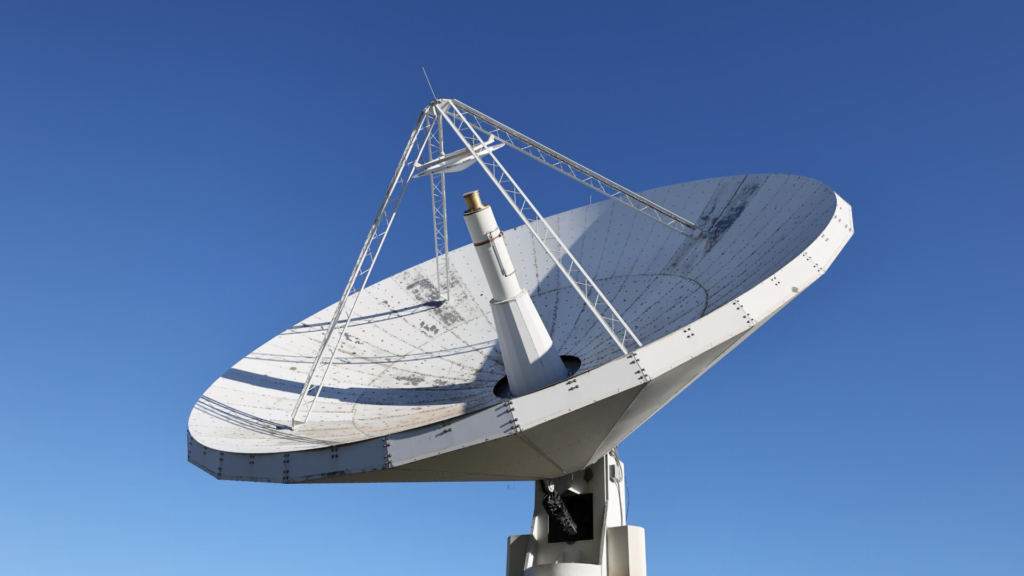
How can we measure the Earth with millimetre precision? How can radio telescopes observing extragalactic black holes help us monitor sea-level rise and tectonic plate motion? These questions and more are answered on a new website developed by the geodetic VLBI research group at the University of Tasmania, in collaboration with Geoscience Australia and AuScope.
This accessible and visually engaging explainer introduces the fundamentals of Very Long Baseline Interferometry (VLBI) and demonstrates why billions of people depend on it every day, often without realising it. Through videos, animations, graphics, and clear explanations, visitors can discover how radio telescopes distributed across the globe work together to measure distances of thousands of kilometres with a precision of just a few millimetres.
It shows how these measurements contribute to the International Terrestrial Reference Frame (ITRF), which underpins satellite navigation and Earth observations. Visitors can explore how distant radio sources anchor our celestial reference frame, gain insight into the immense data volumes generated by VLBI experiments, and learn about the crucial role Australia plays in global VLBI operations.
Developed as part of a science communication initiative in partnership with Geoscience Australia and the University of Tasmania, the website was created and produced by David Schunck and Lucia McCallum from the University of Tasmania’s geodetic VLBI research group. All graphics and animations are freely available for educational and non-commercial use with appropriate attribution.
Author: David Schunck