TIGER Symposium in Geodesy 2026
The TIGER Symposium in Geodesy 2026 (Tracking and Investigating Geodynamics and Earth Rotation) was held from 28 September to 1 October 2026 in Gävle, Sweden, hosted by Lantmäteriet. The symposium marked the first meeting of the International Association of Geodesy (IAG) Commission 3 on Earth Rotation and Geodynamics. A special part of IAG Commission 3 is its three joint sub-commissions with other associations within the International Union of Geodesy and Geophysics (IUGG): the International Association of Cryospheric Sciences (IACS), the International Association of Seismology and Physics of the Earth’s Interior (IASPEI) and the International Association of Volcanology and Chemistry of the Earth’s Interior (IAVCEI). This reflects the interdisciplinary scope of the commission and its close links with other Earth science communities.
The symposium brought together the international geodetic and geophysical research communities to exchange knowledge and discuss recent scientific advances. The main topics included Earth rotation, tidal and non-tidal loading, cryospheric and hydrological deformation, volcanogeodesy, and seismogeodesy. The presentations addressed various processes affecting the Earth’s rotation and deformation, as well as its response to internal and external forces and their links to climate change and natural hazards.
Several important topics came up during the discussions, including the need for better communication across disciplines, with this year’s TIGER Symposium being hopefully the start of a new tradition of having a commission symposium every four years. Another point of discussion was the close link between loading models and geodetic observations: models are needed to correct many geodetic measurements, while observations are equally important for checking the models. The importance of communicating modelling uncertainties, particularly how they affect the derived geodetic products, was also highlighted. Finally, the role of the FAIR principles (Findability, Accessibility, Interoperability, and Reusability) in data promotion was discussed, together with the need to make data available through regional and global research infrastructures. These aspects are especially important for applied fields such as seismogeodesy and volcanogeodesy. For a more detailed summary see the summary slides: https://cloud.geodesy.science/s/tiger2026-summary
The meeting attracted 275 registered participants, including 99 attending on-site and 176 remotely, with participants from all continents. More than 50% of the on-site attendees were early career scientists (ECS), and 40% identified as women. Furthermore, 24 of the 99 on-site attendees came from low- and middle-income countries, many of whom received travel grants from IAG, IACS, IASPEI, IAVCEI, the U.S. National Science Foundation (NSF), or the Carl Trygger Foundation. These contributions helped making the TIGER Symposium a diverse conference, providing ECS with opportunities to present their research, exchange ideas with other scientists, and build international networks. The format with dedicated keynote presentations and extended discussion sessions was particularly well received by the attendees. Also, the chance to ask questions via an online tool was appreciated by ECS and the conveners.
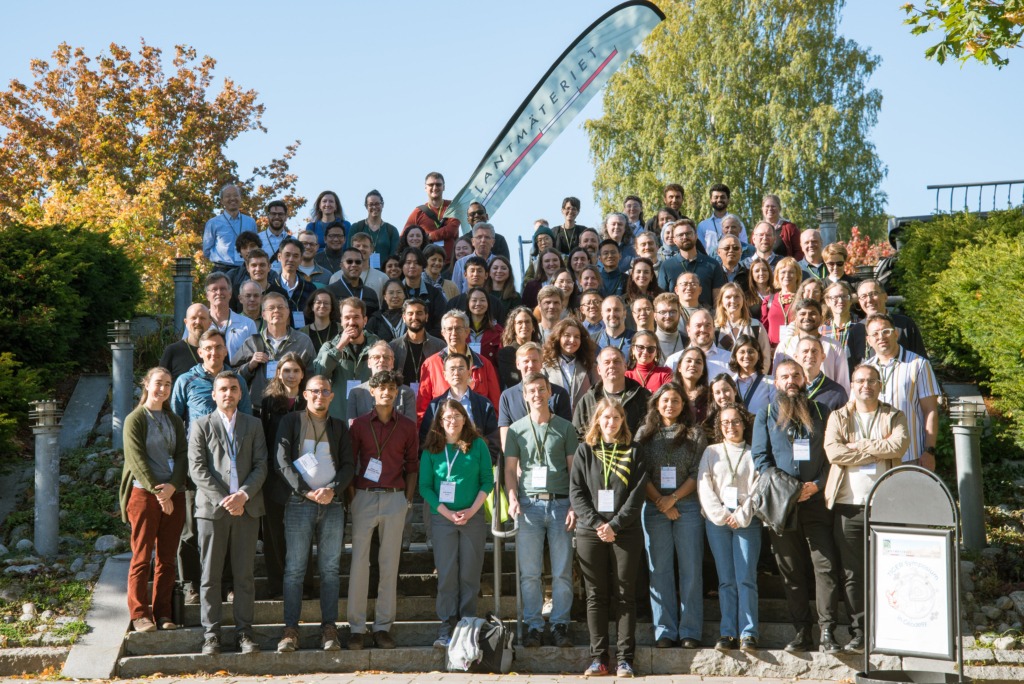
Figure 1: Group picture of all attendees of the TIGER Symposium in Geodesy 2026. Picture taken by Örjan Josefsson.
Beyond the scientific programme, ECS gathered on Tuesday evening to watch an (ice) hockey game of the local club, Brynäs IF, whose team is also known as the “Tigers”. The event offered an excellent opportunity to connect with other ECS outside the conference setting while experiencing an important part of Swedish culture and local life in Gävle. Many thanks to IAG and IACS as well as Brynäs IF for co-sponsoring the event. We are sure the evening has gained a few new ice hockey fans!
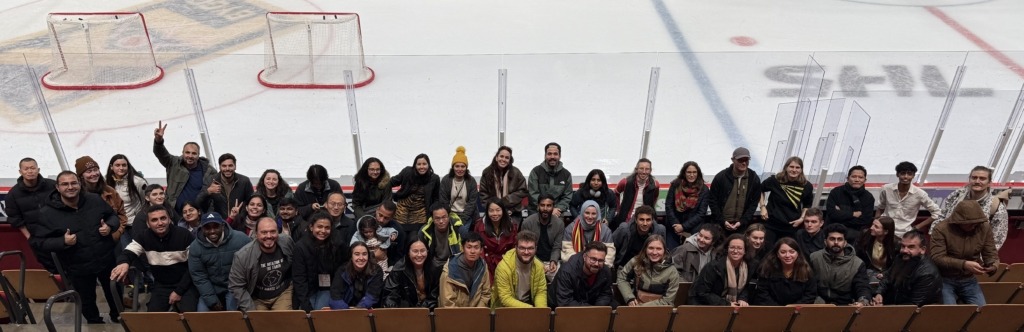
Figure 2: Group picture of the ECS attending the hockey game. Picture taken by Jeff Freymueller.
Overall, the TIGER Symposium in Geodesy 2026 provided an important forum for scientific exchange, strengthened the international network, and supported the next generation of researchers working to advance our understanding of geodynamics and its observation through geodetic techniques. The involvement of four IUGG associations (IAG, IACS, IASPEI, and IAVCEI) also highlighted the value of interdisciplinary collaboration, bringing together complementary expertise from geodesy, cryospheric sciences, seismology, and volcanology to address various geodynamic processes using geodetic data. Hopefully, this interdisciplinary exchange will continue to foster collaboration between the different research communities and help address future challenges in understanding the Earth’s dynamic processes.
Author: Rebekka Steffen