IAG Honors Outstanding Contributions in Geodesy: Awardees of 2023 and 2024
The International Association of Geodesy (IAG) is pleased to announce the recipients of its Young Author’s Award and Best Reviewer’s Award for 2023 and 2024. These awards recognize outstanding contributions to the advancement of geodesy through high-quality research and service to the scientific community.
-
The Young Author’s Award honors early-career scientists who have published exceptional papers in the Journal of Geodesy.
-
The Best Reviewer’s Award acknowledges dedicated reviewers whose thorough and constructive feedback has significantly enhanced the quality of published research.
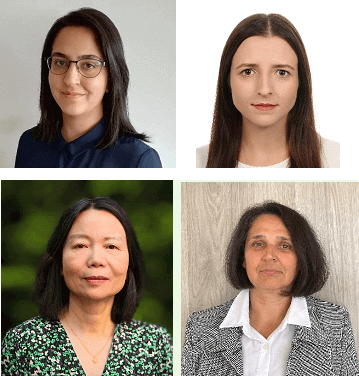
In 2023 and 2024, following four outstanding scientists were selected for these distinctions. Their work spans topics from GNSS positioning and statistical testing theory, to Earth rotation and satellite gravimetry, to hydrological modeling and gravitational field analysis. Each of them exemplifies excellence, dedication, and innovation in geodetic science.
The IAG Young Author’s Award 2023 is presented to Dr. Safoora Zaminpardaz
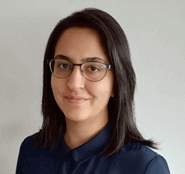
IAG Awardee Safoora Zaminpardaz
Zaminpardaz S, Teunissen PJG (2023). Detection-only versus detection and identification of model misspecifications, Journal of Geodesy, 97, https://doi.org/10.1007/s00190-023-01740-2
Dr. Safoora Zaminpardaz is a senior lecturer in Geospatial Science at RMIT University, Melbourne, Australia. Her expertise spans multi-GNSS positioning, mathematical geodesy, geodetic quality control and integrity monitoring, as well as probability and testing theory. She has a Ph.D. in Geodesy and GNSS from Curtin University, Perth, Australia. Immediately after the conferral of her PhD degree in 2018, she was offered a postdoctoral research fellowship within the Department of Geoscience and Remote Sensing at Delft University of Technology (TU Delft), The Netherlands. Right after the end of her contract at TU Delft, she joined the School of Science at RMIT University as a continuing full-time lecturer in Geospatial Science. She is a member of the Institute of Navigation (ION) and has been serving as a member, chair, or co-chair of several working groups within the International Association of Geodesy (IAG).
The IAG Young Author’s Award 2024 is presented to Dr. Justyna Śliwińska-Bronowicz
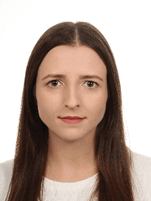
IAG Awardee Justyna Sliwinska Bronowicz
Śliwińska-Bronowicz J, Kur T, Wińska M, etc (2024). Assessment of length-of-day and universal time predictions based on the results of the Second Earth Orientation Parameters Prediction Comparison Campaign, Journal of Geodesy, 98, https://link.springer.com/article/10.1007/s00190-024-01824-7
Dr. Justyna Śliwińska-Bronowicz studied Geodesy and Cartography at the Warsaw University of Technology, beginning in 2011. She received her Bachelor of Science degree in 2015 and her Master of Science degree in 2016. Her diploma theses focused on the use of absolute and relative gravimetric measurements to analyse the vertical gravity gradient and validate global geopotential models derived from satellite gravity missions (CHAMP, GRACE, and GOCE). In 2016, she joined the Space Research Centre of the Polish Academy of Sciences (CBK PAN) as a researcher on a project investigating hydrological signals in Earth rotation. Shortly thereafter, she began doctoral studies at CBK PAN in the field of space research and the application of satellite techniques to the study of Earth rotation. She received her PhD in 2022, defending with distinction a dissertation entitled “Estimating and validating the hydrological and cryospheric signal in polar motion excitation determined from observations of the Gravity Recovery and Climate Experiment (GRACE) and GRACE Follow-On (GRACE-FO) satellite missions.” She is currently an assistant professor at CBK PAN. Her research interests include the geophysical interpretation of Earth rotation variation, forecasting Earth Orientation Parameters (EOP), and applying satellite gravimetry to monitor changes in global water resources. She recently launched a project focused on transboundary groundwater monitoring based on in-situ observations and GRACE/GRACE-FO data. Since 2021, she has overseen the 2nd EOP Prediction Comparison Campaign (2nd EOP PCC), an international initiative led by CBK PAN aimed at evaluating current EOP prediction capabilities. She also serves as co-chair of the Joint Study Group “AI for EOP Prediction”, part of the GGOS Focus Area AI for Geodesy.
The IAG Best Reviewer’s Award 2023 is presented to Dr. Bailing Li
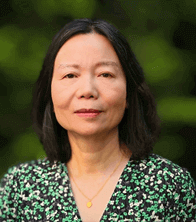
IAG Awardee Bailing Li
Dr. Bailing Li is an Associate Research Scientist at the Hydrological Sciences Laboratory of NASA Goddard Space Flight Center, affiliated with ESSIC University of Maryland. Her research focuses on advancing understanding of hydrological processes through integrating remote sensing, in situ observations and numerical modeling. Her expertise spans groundwater modeling, data assimilation, drought monitoring, and global-scale syntheses of changes in hydrological processes and extremes.
Dr. Li is the lead developer of the Global Land Data Assimilation System V2.2 (GLDAS2.2) which integrates GRACE/FO data into the NASA Catchment land surface model through data assimilation. A key achievement of this work is the global-scale validation using well data which provides convincing evidence that GRACE/FO data assimilation is effective for improving large-scale groundwater modeling. The validation effort has helped garner worldwide interest in GLDAS2.2, with millions of data files downloaded annually.
Her recent research on changing hydrological extremes has drawn renewed interest in GRACE/FO data from both the scientific community and the general public. In recognition of her expertise, she has been invited by Nature Reviews Earth & Environment to lead the “Year in Review” article on terrestrial water storage for two consecutive years.
Bailing holds a PhD in Hydrology from the University of Arizona and is a member of the NASA Western Water Application Office (WWAO) Science Team.
The IAG Best Reviewer’s Award 2024 is presented to Dr. Judit Benedek

IAG Awardee Judit Benedek
Dr. Judit Benedek graduated in 1990 with a degree in mathematics at the Babes-Bolyai University in Cluj-Napoca, Romania. She received his PhD at the University of Sopron in 2009 in the topic of synthetic modelling of the gravitational field. Since 1996 she has worked for the HUN-REN Institute of Earth Physics and Space Science, Sopron, Hungary. First she received a young research fellowship of the Hungarian Academy of Sciences, then she became a research associate of the institute and works now in Geodesy Research Unit led by Dr. Gábor Papp.
Her scientific work focuses on modelling the Earth gravitational field especially in the Alpine – Carpathian – Pannonian Basin region, providing improved algorithms to speed up the forward modelling calculations based on analytical formulae. Her achievements contribute to a better understanding of the relation between Earth’s gravity field and its internal density distribution. In addition the modelling technology she improved can also be used for the analytical calculation of mass attraction effect of compact bodies used for example laboratory calibration of gravity sensors like gravimeters and pendulum type tilt meters.
Over the past decade, she has been also involved in the development of a local network of nanoradian resolution tilt meters along the Mur-Mürz tectonic fault line situated near to the national border between Austria and Hungary. The network helps the seismotectonic monitoring and the interpretation of the geodynamics of this seismically active area. In the last years she has also contributed to a publication analysing the influence of meteorological and hydrological effects on the ground tilt observations.