• Link to LinkedIn
  • Link to Youtube
  • Link to Facebook
  • Link to Instagram
  • Link to X
  • Link to Telegram
  • Link to Behance
  • Link to Rss this site
  • Link to Mail
  • NEWS
  • EVENTS
  • JOBS
  • MEMBER
  • Sitemap
    • Home
      • NEWS
      • EVENTS
      • JOBS
      • MEMBERSHIP
    • ⭐ About Geodesy
    • 🏛️ IAG | International Association of Geodesy
      • About IAG
      • Structure
      • 🎓 ECS – Early Career Scientists
      • 🌈 IDEA – Inclusion, Diversity, Equity, Accessibility
    •   └─ Comissions
      • 1️⃣ Reference Frames
      • 2️⃣ Gravity Field
      • 3️⃣ Earth Rotation & Geodynamics
      • 4️⃣ Positioning & Applications
    •   └─ Inter Commission Committees
      • 📚 ICCT – Theory
      • 🌊 ICCM – Marine Research
      • 🌥️ ICCC – Climate Research
    •   └─ Project QuGe
    •   └─ Services
    • 🌍 GGOS | Global Geodetic Observing System
      • About GGOS
      • Structure
      • 🛰️ Observations
      • 📦 Products
      • ⚙️ Services
  • Shopping Cart Shopping Cart
    0Shopping Cart
geodesy.science - IAG website
  • GGOS
    • Home
      • NEWS
      • EVENTS
      • JOBS
      • MEMBERSHIP
    • ⭐ About Geodesy
    • 🏛️ IAG | International Association of Geodesy
      • About IAG
      • Structure
      • 🎓 ECS – Early Career Scientists
      • 🌈 IDEA – Inclusion, Diversity, Equity, Accessibility
    •   └─ Comissions
      • 1️⃣ Reference Frames
      • 2️⃣ Gravity Field
      • 3️⃣ Earth Rotation & Geodynamics
      • 4️⃣ Positioning & Applications
    •   └─ Inter Commission Committees
      • 📚 ICCT – Theory
      • 🌊 ICCM – Marine Research
      • 🌥️ ICCC – Climate Research
    •   └─ Project QuGe
    •   └─ Services
    • 🌍 GGOS | Global Geodetic Observing System
      • About GGOS
      • Structure
      • 🛰️ Observations
      • 📦 Products
      • ⚙️ Services
  • About
    • About GGOS
      • What is GGOS?
      • Why GGOS?
      • Dual Roles of GGOS
      • Vision and Mission
      • GGOS History
  • Structure
    • Governance & Leadership
      • Governing Board GB
      • Executive Committee EC
    • Coordinating Office CO
    • Science Panel
    • Bureaus
      • BNO – Networks and Observations
      • BPS – Products and Standards
    • Focus Areas
      • Geohazards Monitoring
      • Geodetic Space Weather Research
      • Artificial Intelligence for Geodesy (AI4G)
    • GGOS Affiliates
      • GGOS Japan
      • GGOS D-A-CH
      • GGOS IberAtlantic
    • GGOS Committees & Working Groups
  • Observations
  • Services
  • Products
  • Resources
    • Resources Overview
    • Outreach Materials
    • Logos & Organisation Chart
    • Reports and Articles
    • Presentations and Videos
    • GGOS Meeting Reports
    • Terms of Reference and Strategy
  • Click to open the search input field Click to open the search input field Search
You are here: Home1 / IAG GGOS2 / Structure3 / Focus Areas4 / Geohazards Monitoring

GGOS Focus Area

Geohazards Monitoring

The GGOS Geohazards Monitoring Focus Area seeks to accelerate and guide the acceptance of new geodetic capability to improve resilience to environmental hazards. The Focus Area establishes working groups comprised of GGOS members and the responsible agencies of participating nations. The Focus Area encourages the sharing of intellectual, financial and physical resources as recommended by the UN-GGIM.

GNSS for Tsunami Early Warning

The Geohazards Monitoring Focus Area is focussed on the GNSS enhancement of Tsunami Early Warning Systems (GTEWS) as recommended by Resolution #4 of the 2015 IUGG General Assembly and further illuminated by the General Assembly’s Resolutions #6 and #7 that emphasize the importance of international scientific cooperation in meeting the challenge of geohazards. The focus upon GTEWS builds upon  the GGOS vision document recommendation #5.8 that calls upon us to “promote the development of GNSS seismology particularly for early warning and disaster assessment”.

Tim Melbourne

Tim Melbourne

Chair of GGOS Focus Area "Gehohazards Monitoring"
geodesy.science - IAG website

Tsunami detection by GNSS caused by Tohoku earthquake – GTEWS (GNSS enhancement of Tsunami Early Warning Systems)

GNSS-Enhanced Tsunami Early Warning Topic Group of ITU Focus Group on AI for Natural Disaster Management

Status report of GGOS Focus Area Geohazards at GGOS Days 2024

The importance of GTEWS was amply defined in the powerful Tohoku oki earthquake and tsunami recorded by one of the world’s most advanced GNSS ground networks, the Japanese GEONET. The Geodetic and Geohazards community studied the data extensively and concluded that the GNSS could have provided an accurate early warning within five minutes of the Tohoku oki earthquake’s onset. The same GNSS capability could have provided verification of the tsunami scale and  begin to track its propagation before the inundation of the nearest coastal community. GTEWS could provide authorities significant time to warn the local communities with far fewer false alarms. This information was provided by the GGOS co-sponsored GTEWS 2017 workshop reports.  The GTEWS 2017 workshop reports are published by the Association of Pacific Rim Universities (APRU) and following peer review by the UN Office for Disaster Risk Reduction (UNDRR) as a contributing paper to the Global Assessment Report for 2019 (GAR19).
GGOS Focus Area Geohazards GNSS Tsunami Early Warning

Watch GTEWS film …

GATEW Working Group

As its first initiative, the GGOS Geohazards Monitoring Focus Area initiated and established a working group for the GNSS Augmentation of Tsunami Early Warning (GATEW) for the implementation of the GTEWS initiative in 2016. The GATEW Working Group was formed by a Call for Participation issued by GGOS Chair Kutterer. The GGOS Call for Participation in the GATEW working group remains open to all agencies and institutions that can provide resources and knowledge for the advancement of its GTEWS initiative. The GATEW Working Group currently numbers 18 exceptional institutions from 12 nations. The GATEW members were central to the success of the GTEWS 2017 meeting its report and the unfolding implementation of GTEWS.
GGOS Geohazard Monitoring
© Pexels Info Info

Further Steps

The COVID-19 health and economic crisis is impacting the Geohazards Focus Area. The Focus Area had announced a group meeting GTEWS 2020 as a sequel to GTEWS 2017 in collaboration with the IUGG, APRU, Tohoku University, U. California-Davis. The meeting is now postponed due to the challenges of travel due to the pandemic and its aftermath.

Given this delay, the Geohazards Focus Area determined that it is best to move forward with the first recommendation of the GTEWS 2017 workshop i.e., the establishment of a consortium to oversee the development and operation of a GNSS Tsunami Early Warning capability for the Indo-Pacific and Caribbean Basins. The IUGG is making starter funds to support the planning of a meeting of principal organizations to develop a GTEWS Consortium to encourage the shared access to real time multi-GNSS data  and processing software within cloud computing environment.
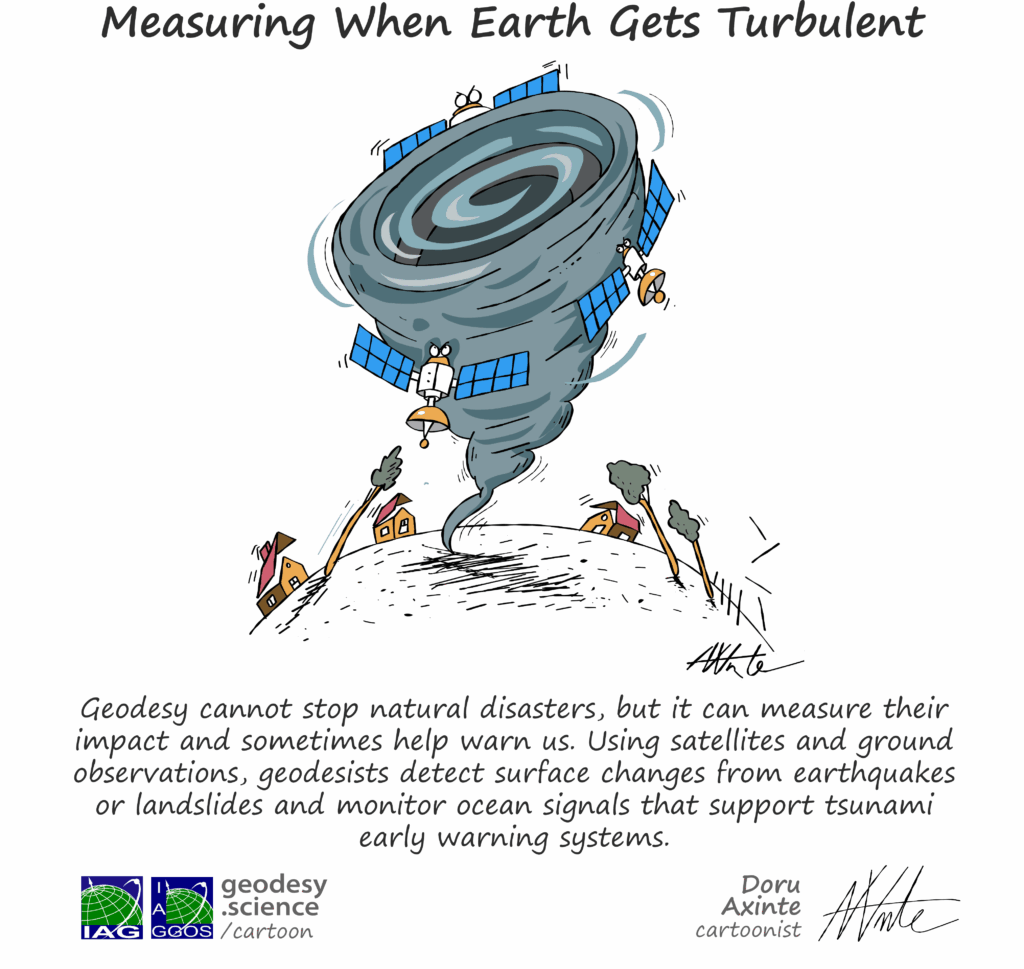
The concept of a meeting of principals to discuss the GTEWS Consortium has been endorsed by the GGOS Coordinating Board, the IAG President, the IUGG Commission on Geophysical Risk and Sustainability (GRC) . The Geohazards Focus Area is working with the GRC and the Geodesy4Sendai activity of the Group on Earth Observations (GEO) to develop support and resources to assemble a consortium of principal organizations for the formation of the GTEWS Consortium. We believe that the members of the GATEW working group will play an essential role within the GTEWS Consortium.

During the coming months, the GATEW Working Group will conduct virtual meetings of small subgroups to discuss support for GTEWS Consortium its goals, strategies and timelines and membership composition including those government agencies responsible for the disaster risk management. The Focus Area will recommend that the findings and recommendations of the GTEWS 2017 workshop serve as the foundation for the GTEWS Consortium. Furthermore, the GTEWS Consortium will likely require;

  • National government participation for access to real time data
  • Participation of national emergency response agencies to insure proper interface and support.
  • Broadband communications secure during disaster response
  • Cloud computing support
  • Science and technology readiness

(last update 11/2020)
Further documents are available at GGOS Cloud...

Page Navigation

  • IAG GGOS
  •   ─ Structure
  •     ─ Focus Areas
  •        ★ Geohazards Monitoring
    •        ☆ Artificial Intelligenc...
    •        ☆ Unified Height System
    •        ☆ Geodetic Space Weather...

News

  • Honorary colloquium for Prof. Torge and Prof. Seeber at Leibniz University Hannover
  • Webinar: A Synergy between EUREF and EPOS: GNSS Data Quality Monitoring Service (DQMS)
  • Geodesy Day – International Webinar on Geodesy
  • Geodetic Data: Applying FAIR, TRUST and CARE Principles

Join Us!

Join Mailing Lists

Become IAG Member

IAG as part of the IUGG

  
The International Association of Geodesy (IAG)  is a constituent association of the International Union of Geodesy and Geophysics (IUGG).

IAG Related Organisations

IAG collaborates closely with numerous organizations within geodesy and beyond. See the list for details.

Sitemap

  • Home | geodesy.science
  • ⠀└─ 📰News
  • ⠀└─ 📅 Events
  • ⠀└─ 💼 Jobs
  • ⠀└─ 👥 Membership
  • ⭐ About Geodesy
  • 🏛️ IAG | Int. Association of Geodesy
  • ⠀└─ ➡️ Commissions:
  • ⠀⠀◻️ 1 – Reference Frames
  • ⠀⠀◻️ 2 – Gravity Field
  • ⠀⠀◻️ 3 – Earth Rotation & Geodynamics
  • ⠀⠀◻️ 4 – Positioning and Applications
  • ⠀└─ 🔀 Inter Commission Committees:
  • ⠀⠀◻️ ICCT – Theory
  • ⠀⠀◻️ ICCM – Marine Research
  • ⠀⠀◻️ ICCC – Climate Research
  • ⠀└─ ⏰ Project QuGe
  • ⠀└─ ⚙️ IAG Services
  •  🌎 GGOS | Observing System
  • ⠀└─ About GGOS
  • ⠀└─ Structure
  • ⠀└─ Observations
  • ⠀└─ Products
  • ⠀└─ Services

References

Geodesy Glossary

Media Library

IAG Cloud | Public Documents

Terms of Use / Privacy Policy

IAG Statutes

IAG By-laws

Contact Us

Contact

Follow Us

LinkedIn

BlueSky

X (Twitter)

Facebook

Instagram

YouTube

Telegram

RSS Feed

Mailing List

This website is provided by the IAG Secretariat and the GGOS Coordinating Office, which are hosted by the BEV – Federal Office of Metrology and Surveying (Bundesamt für Eich- und Vermessungswesen) in Vienna, Austria.

Website Language Translation

The primary language of this website is English – however, the integrated GTranslate tool enables automatic translation into several languages:

Please note that translations into other languages may not be accurate. For reliable information, refer to the English version of the website.

2026 © Copyright | IAG - International Association of Geodesy
  • Link to LinkedIn
  • Link to Youtube
  • Link to Facebook
  • Link to Instagram
  • Link to X
  • Link to Telegram
  • Link to Behance
  • Link to Rss this site
  • Link to Mail
Scroll to top Scroll to top Scroll to top
Accessibility Adjustments

Powered by OneTap

How long do you want to hide the toolbar?
Hide Toolbar Duration
Select your accessibility profile
Vision Impaired Mode
Enhances website's visuals
Seizure Safe Profile
Clear flashes & reduces color
ADHD Friendly Mode
Focused browsing, distraction-free
Blindness Mode
Reduces distractions, improves focus
Epilepsy Safe Mode
Dims colors and stops blinking
Content Modules
Font Size

Default

Line Height

Default

Color Modules
Orientation Modules