• Link to LinkedIn
  • Link to Youtube
  • Link to Facebook
  • Link to Instagram
  • Link to X
  • Link to Telegram
  • Link to Behance
  • Link to Rss this site
  • Link to Mail
  • NEWS
  • EVENTS
  • JOBS
  • MEMBER
  • Sitemap
    • Home
      • NEWS
      • EVENTS
      • JOBS
      • MEMBERSHIP
    • ⭐ About Geodesy
    • 🏛️ IAG | International Association of Geodesy
      • About IAG
      • Structure
      • 🎓 ECS – Early Career Scientists
      • 🌈 IDEA – Inclusion, Diversity, Equity, Accessibility
    •   └─ Comissions
      • 1️⃣ Reference Frames
      • 2️⃣ Gravity Field
      • 3️⃣ Earth Rotation & Geodynamics
      • 4️⃣ Positioning & Applications
    •   └─ Inter Commission Committees
      • 📚 ICCT – Theory
      • 🌊 ICCM – Marine Research
      • 🌥️ ICCC – Climate Research
    •   └─ Project QuGe
    •   └─ Services
    • 🌍 GGOS | Global Geodetic Observing System
      • About GGOS
      • Structure
      • 🛰️ Observations
      • 📦 Products
      • ⚙️ Services
  • Shopping Cart Shopping Cart
    0Shopping Cart
geodesy.science - IAG website
  • GGOS
    • Home
      • NEWS
      • EVENTS
      • JOBS
      • MEMBERSHIP
    • ⭐ About Geodesy
    • 🏛️ IAG | International Association of Geodesy
      • About IAG
      • Structure
      • 🎓 ECS – Early Career Scientists
      • 🌈 IDEA – Inclusion, Diversity, Equity, Accessibility
    •   └─ Comissions
      • 1️⃣ Reference Frames
      • 2️⃣ Gravity Field
      • 3️⃣ Earth Rotation & Geodynamics
      • 4️⃣ Positioning & Applications
    •   └─ Inter Commission Committees
      • 📚 ICCT – Theory
      • 🌊 ICCM – Marine Research
      • 🌥️ ICCC – Climate Research
    •   └─ Project QuGe
    •   └─ Services
    • 🌍 GGOS | Global Geodetic Observing System
      • About GGOS
      • Structure
      • 🛰️ Observations
      • 📦 Products
      • ⚙️ Services
  • About
    • About GGOS
      • What is GGOS?
      • Why GGOS?
      • Dual Roles of GGOS
      • Vision and Mission
      • GGOS History
  • Structure
    • Governance & Leadership
      • Governing Board GB
      • Executive Committee EC
    • Coordinating Office CO
    • Science Panel
    • Bureaus
      • BNO – Networks and Observations
      • BPS – Products and Standards
    • Focus Areas
      • Geohazards Monitoring
      • Geodetic Space Weather Research
      • Artificial Intelligence for Geodesy (AI4G)
    • GGOS Affiliates
      • GGOS Japan
      • GGOS D-A-CH
      • GGOS IberAtlantic
    • GGOS Committees & Working Groups
  • Observations
  • Services
  • Products
  • Resources
    • Resources Overview
    • Outreach Materials
    • Logos & Organisation Chart
    • Reports and Articles
    • Presentations and Videos
    • GGOS Meeting Reports
    • Terms of Reference and Strategy
  • Click to open the search input field Click to open the search input field Search
You are here: Home1 / IAG GGOS2 / GGOS Observations3 / PSMSL – Permanent Service for Mean Sea Level

PSMSL – Permanent Service for Mean Sea Level

PSMSL Permanent Service for Mean Sea Level IAG
Go To Service

Development

Since 1933, the Permanent Service for Mean Sea Level (PSMSL) has been responsible for the collection, publication, analysis and interpretation of sea level data from the global network of tide gauges. It is based at the National Oceanography Centre (NOC) in Liverpool, UK. The PSMSL continues to be one of the main data centres for both the International Association of Geodesy (IAG) and the International Association for Physical Sciences of the Oceans (IAPSO). The PSMSL operates under the auspices of the International Science Council (ISC) and reports formally to IAPSO’s Commission on Mean Sea Level and Tides. The PSMSL is a regular member of the World Data System of ISC.

Mission/Objectives

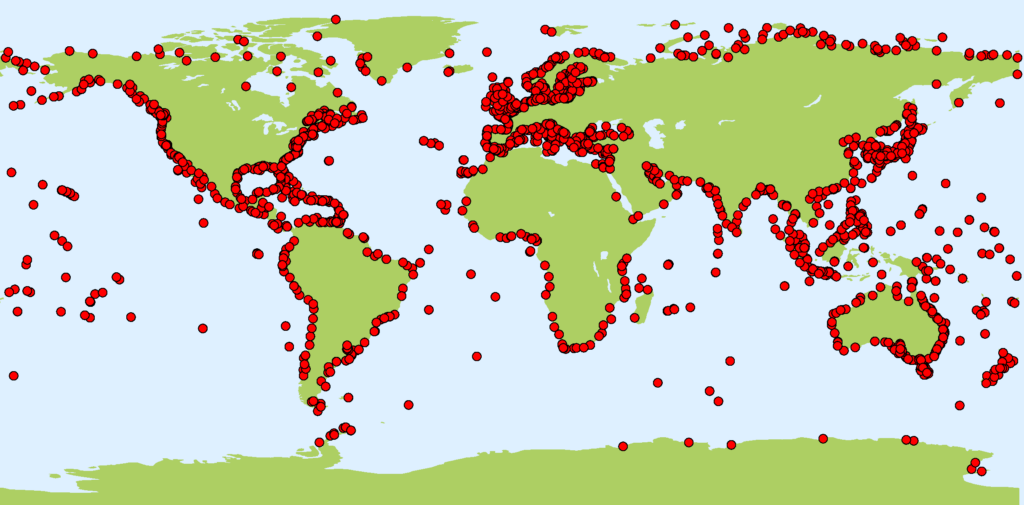
The primary purpose of the PSMSL is to grow the databank and fill in gaps in the observational network, incorporating novel techniques (e.g. automatic QC) and technologies (e.g. Global Navigation Satellite System (GNSS) Interferometric Reflectometry). The main PSMSL data set consists of monthly and annual means of sea level from over 2000 stations around the world, making up over 72,000 station-years of information. These data are used within a wide range of geosciences, of which studies of sea level rise in assessments such as those of the Intergovernmental Panel on Climate Change (IPCC) are the most highly-cited. The maintenance of this data set requires communication with agencies in almost every country in the world with a coastline.

PSMSL report at the GGOS Days 2023

The PSMSL plays a major role in network building and works closely with the Intergovernmental Oceanographic Commission (IOC) in the construction of the Global Sea Level Observing System (GLOSS). An important component of that work relates to capacity building, and the PSMSL has organized or been heavily involved in the organization of training courses over the last 30 years. In addition, it has worked with the IOC and other agencies to advise and assist with the installation of new stations in Africa, the Caribbean, and other data sparse areas.

Networks

While the main PSMSL data set is composed of monthly and annual mean values of sea level, it works closely with the British Oceanographic Data Centre (BODC), the University of Hawaii Sea Level Centre (UHSLC) and the Flanders Marine Institute (VLIZ) to provide records of ‘high-frequency’ (<= hourly values) sea level data for use in studies of tides and extreme water levels. The appropriate links may be found on its web site. The PSMSL works closely with other IAG-related Services, especially the IGS and IDS with regard to the measurement of vertical land movements at tide gauges. The PSMSL has been working in collaboration with colleagues at SONEL, the GLOSS data centre for GNSS measurements, to make it easier to connect the PSMSL data with SONEL's GNSS data. SONEL also maintains a catalogue of DORIS beacons co-located with tide gauges.

Publications

Formal reviews of the work of the PSMSL are available (Woodworth and Player, 2003; Holgate et al., 2011). However, the PSMSL has also recently put major effort into improving the delivery from its web site (www.psmsl.org) of a wide range of data, derived products, and background and training information.
tide gauge stations PSMSL network map 2020
© PSMSL Info Info

1. (a) Stations represented in the data set of the Permanent Service for Mean Sea Level (PSMSL)
tide gauge stations PSMSL network map 2020
© PSMSL Info Info

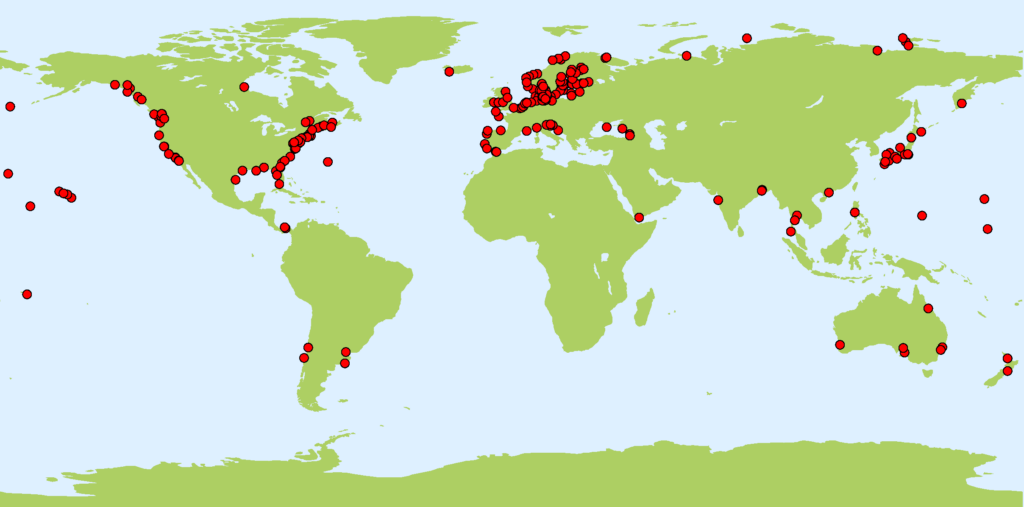
1. (b) Stations with long records containing more than 60 years of data

References

Holgate, S.J. et al. 2011. New Data Systems and Products at the Permanent Service for Mean Sea Level. (In preparation).

Woodworth, P.L. and Player, R. 2003. The Permanent Service for Mean Sea Level: an update to the 21st century. Journal of Coastal Research, 19, 287-295.

Content of this contribution provided by Phil Woodworth and updated by Elizabeth Bradshaw and Andy Matthews (2020)

(last update 09.2020)

IAG SERVICES

Geometric & General Services

  • IERS iag service earth rotation reference system frame© IERS
    IERS – Int. Earth Rotation and Reference Systems Service
  • IGS iag service gnss global navigation satellite system© IGS
    IGS – International GNSS Service
  • ILRS laser ranging service iag© ILRS
    ILRS – International Laser Ranging Service
  • IVS VLBI Service IAG© IVS
    IVS – International VLBI Service for Geodesy and Astrometry
  • IDS iag service DORIS© IDS
    IDS – International Doris Service
  • PSMSL Permanent Service for Mean Sea Level IAG© PSMSL
    PSMSL – Permanent Service for Mean Sea Level

Gravity Services

  • IGFS iag service gravity field© IGFS
    IGFS – International Gravity Field Service
  • ICGEM iag service© ICGEM
    ICGEM – International Centre for Global Earth Models
  • IDEMS iag service DEM digital elevation model© IDEMS
    IDEMS – International Digital Elevation Model Service
  • IGETS iag service© IGETS
    IGETS – International Geodynamics and Earth Tide Service
  • ISG service geoid IAG© ISG
    ISG – International Service for the Geoid
  • BGI gravimetric service IAG© BGI
    BGI – International Gravimetric Bureau

IAG as part of the IUGG

  
The International Association of Geodesy (IAG)  is a constituent association of the International Union of Geodesy and Geophysics (IUGG).

IAG Related Organisations

IAG collaborates closely with numerous organizations within geodesy and beyond. See the list for details.

Sitemap

  • Home | geodesy.science
  • ⠀└─ 📰News
  • ⠀└─ 📅 Events
  • ⠀└─ 💼 Jobs
  • ⠀└─ 👥 Membership
  • ⭐ About Geodesy
  • 🏛️ IAG | Int. Association of Geodesy
  • ⠀└─ ➡️ Commissions:
  • ⠀⠀◻️ 1 – Reference Frames
  • ⠀⠀◻️ 2 – Gravity Field
  • ⠀⠀◻️ 3 – Earth Rotation & Geodynamics
  • ⠀⠀◻️ 4 – Positioning and Applications
  • ⠀└─ 🔀 Inter Commission Committees:
  • ⠀⠀◻️ ICCT – Theory
  • ⠀⠀◻️ ICCM – Marine Research
  • ⠀⠀◻️ ICCC – Climate Research
  • ⠀└─ ⏰ Project QuGe
  • ⠀└─ ⚙️ IAG Services
  •  🌎 GGOS | Observing System
  • ⠀└─ About GGOS
  • ⠀└─ Structure
  • ⠀└─ Observations
  • ⠀└─ Products
  • ⠀└─ Services

References

Geodesy Glossary

Media Library

IAG Cloud | Public Documents

Terms of Use / Privacy Policy

IAG Statutes

IAG By-laws

Contact Us

Contact

Follow Us

LinkedIn

BlueSky

X (Twitter)

Facebook

Instagram

YouTube

Telegram

RSS Feed

Mailing List

This website is provided by the IAG Secretariat and the GGOS Coordinating Office, which are hosted by the BEV – Federal Office of Metrology and Surveying (Bundesamt für Eich- und Vermessungswesen) in Vienna, Austria.

Website Language Translation

The primary language of this website is English – however, the integrated GTranslate tool enables automatic translation into several languages:

Please note that translations into other languages may not be accurate. For reliable information, refer to the English version of the website.

2026 © Copyright | IAG - International Association of Geodesy
  • Link to LinkedIn
  • Link to Youtube
  • Link to Facebook
  • Link to Instagram
  • Link to X
  • Link to Telegram
  • Link to Behance
  • Link to Rss this site
  • Link to Mail
Scroll to top Scroll to top Scroll to top
Accessibility Adjustments

Powered by OneTap

How long do you want to hide the toolbar?
Hide Toolbar Duration
Select your accessibility profile
Vision Impaired Mode
Enhances website's visuals
Seizure Safe Profile
Clear flashes & reduces color
ADHD Friendly Mode
Focused browsing, distraction-free
Blindness Mode
Reduces distractions, improves focus
Epilepsy Safe Mode
Dims colors and stops blinking
Content Modules
Font Size

Default

Line Height

Default

Color Modules
Orientation Modules